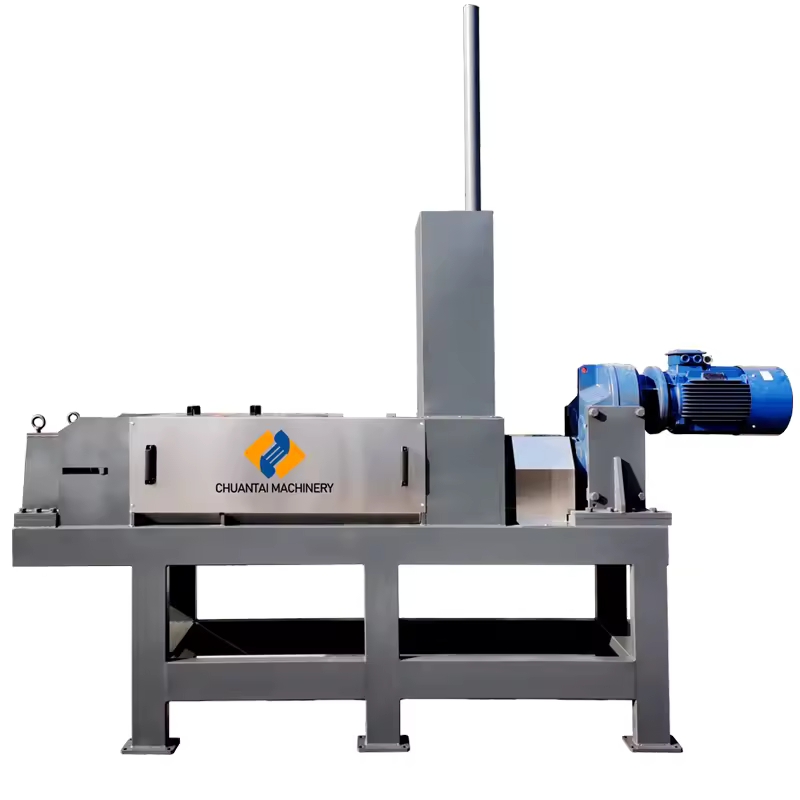
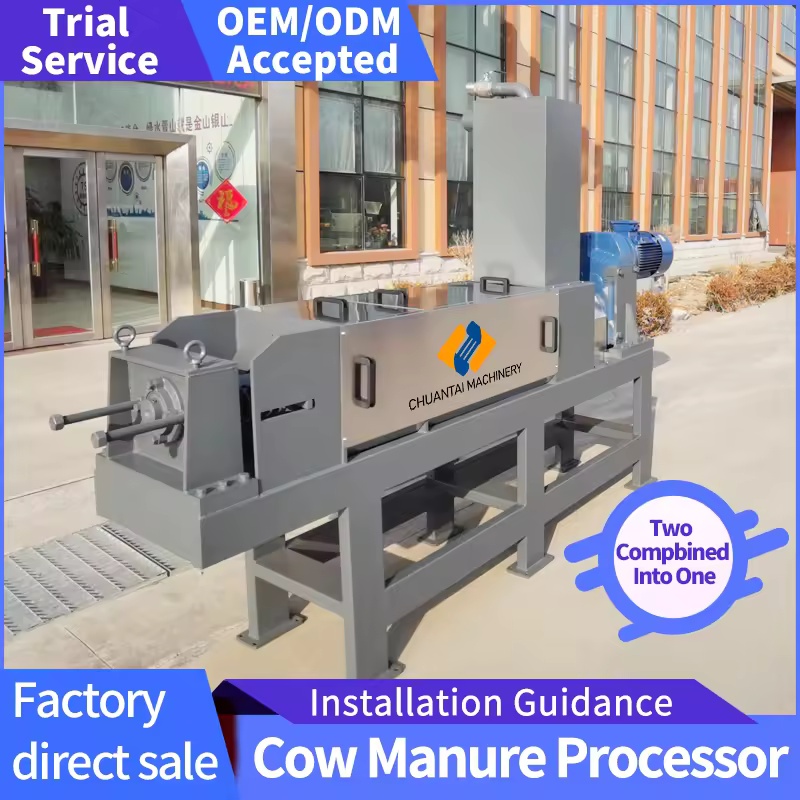
Screw press solid–liquid separator purpose-built for dairy and beef cattle manure — physical squeezing, low energy consumption, turning wet cow dung into stackable solids and reusable liquid.
The cow dung dewatering machine is agricultural equipment designed to separate the solid and liquid components of animal manure — particularly cow dung — through mechanical extrusion and filtration. At the heart of the machine is a screw press mechanism that squeezes water out of raw slurry, reducing its moisture content and transforming it into manageable solid residue and reusable liquid.
Fresh dairy or beef cattle manure typically contains more than 80% water. In that state it is heavy to transport, slow to compost and difficult to store. By running the slurry through the screw press, farms reduce the solid fraction to 40–50% moisture, cutting volume and weight substantially and turning a disposal problem into two usable products.
This cow manure processor is designed for farms feeding liquid manure that can be pumped, and for customers who require a low moisture content and high dryness of the discharged solids. With an adjustable pressure regulator at the discharge end, dryness can be fine-tuned to match your composting, bedding or fertiliser plans.
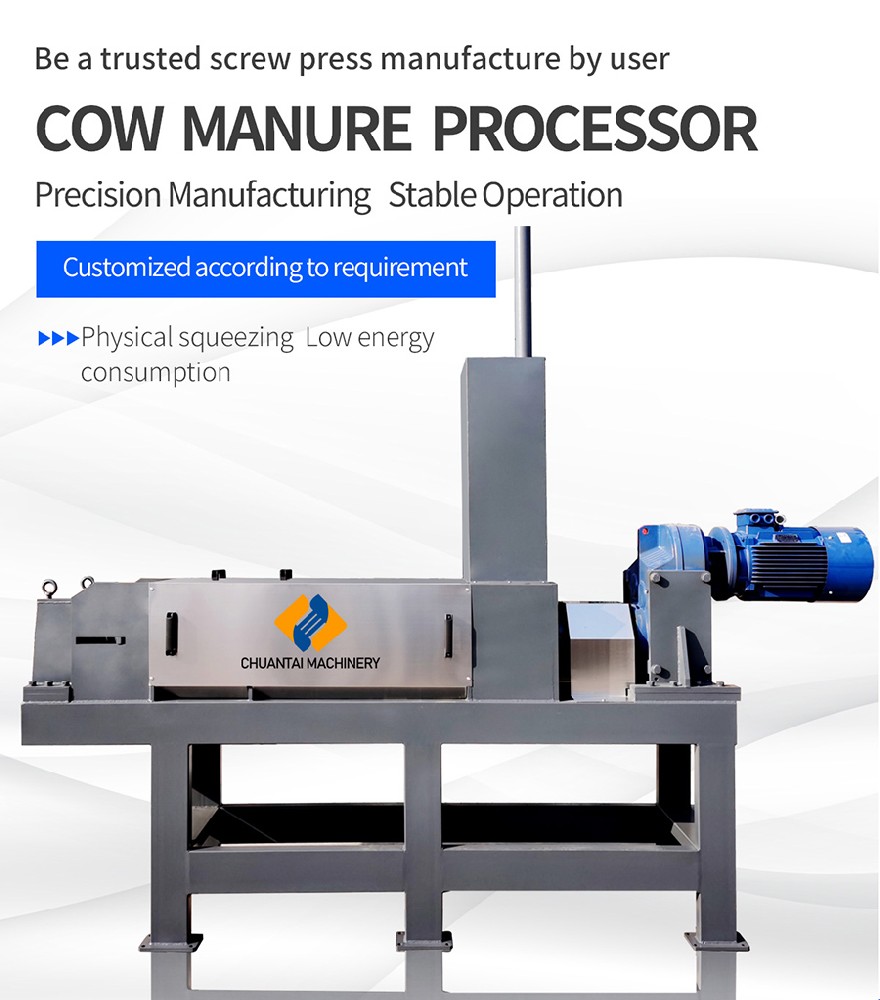
A simple mechanical design with no chemicals and no heating — separation happens purely by extrusion and screening.
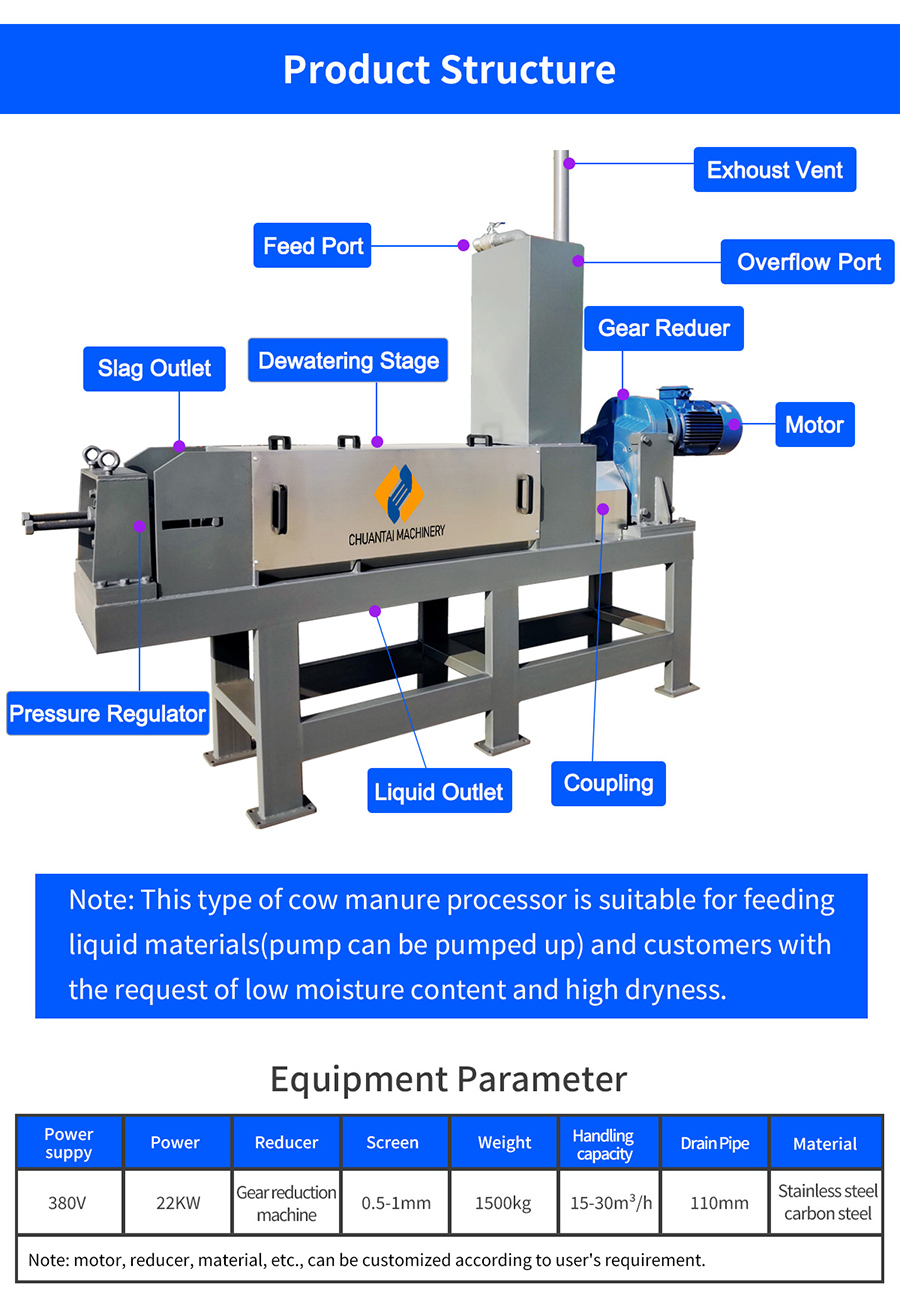
Main parts of the machine (as labelled in the diagram):
The process is straightforward: liquid manure is pumped into the machine, where the rotating screw exerts pressure on the slurry. Water is squeezed out through the screen openings and drained away through the liquid outlet, while the dewatered solids are pushed towards the slag outlet. The adjustable pressure regulator lets the operator fine-tune the dryness of the discharged solids for different farm requirements.
Raw cow dung or manure slurry is pumped (or fed by gravity) into the machine inlet. A submersible pump with an appropriate flow rate is recommended.
The screw shaft rotates at low speed inside the screen barrel, progressively compressing the material and forcing water out.
Liquid passes through the stainless steel screen (0.5–1 mm as standard, other gaps on request) and drains through the outlet pipe; fibre and solids stay inside the barrel.
Dewatered solids (40–50% moisture) are discharged continuously and can be stacked, bagged or composted straight away.
Watch how the machine takes pumped cow manure and discharges dewatered solids continuously — physical squeezing, low energy consumption.
Video: cow dung dewatering machine running at the Chuantai Machinery factory. More videos on our YouTube channel · watch on YouTube.
Built for continuous daily operation with wet, abrasive and corrosive animal slurry.
Purpose-designed for dairy and beef cattle slurry: handles high-fibre cow dung that can be pumped, and delivers noticeably drier solids than simple screen systems.
Handles 5–30 m³/h depending on the model chosen, so the separator keeps pace with daily barn cleaning and flushing.
Stainless steel screw shaft and screen, together with wear-resistant spiral blades, give a longer service life than conventional designs.
Low-speed mechanical separation needs far less energy than drying or thermal treatment, with automated controls and overload protection.
The screen barrel opens for cleaning and the screw can be inspected without dismantling the whole machine — minimal downtime.
Motor, reducer, screen aperture, pump capacity and materials can be matched to your slurry, throughput target and local voltage.
Reference configuration for cow manure separation. Values can be adjusted for your farm.
| Power Supply | Motor Power | Reducer | Screen Gap (mm) | Weight (kg) | Handling Capacity (m³/h) | Drain Pipe (mm) | Material |
|---|---|---|---|---|---|---|---|
| 380V / 50Hz (customisable) | 22 kW | Gear reduction machine | 0.5–1 | 1500 | 15–30 | 110 | Stainless steel, carbon steel |
Note: motor power, reducer, materials and screen aperture can all be customised according to your requirements. Capacity depends on slurry moisture, fibre content and screen selection.
| Model | Motor Power | Processing Capacity | Weight | Dimension (mm) |
|---|---|---|---|---|
| CTYZ-160 | 3 kW | 0.5–1 m³/h | 380 kg | 1380 × 400 × 1500 |
| CTYZ-200 | 5.5 kW | 2–5 m³/h | 650 kg | 2586 × 770 × 1400 |
| CTYZ-300 | 15 kW | 5–10 m³/h | 2300 kg | 4142 × 890 × 1946 |
| CTYZ-400 | 30 kW | 10–15 m³/h | 3500 kg | 4500 × 1000 × 2003 |
| CTYZ-500 | 45 kW | 15–20 m³/h | 4800 kg | 5220 × 1100 × 2330 |
| CTYZ-600 | 55 kW | 20–30 m³/h | 7500 kg | 6600 × 1300 × 2500 |
Throughput figures are indicative and vary with material type, feed moisture and screen aperture. Tell us your daily manure volume and we will recommend a model — and test your material free of charge.
Not sure which model suits your herd size?
Send us your daily manure volume (m³/day), barn flushing method and local voltage, and our engineers will recommend a model within 24 hours. See also: Cow Dung Processor Guide · Cow Manure Application Page · All Screw Press Models
Both output streams have value on the farm or can be sold on.
Stackable and easy to handle, the dewatered solids can be put to work in several ways:
The separated liquid keeps the soluble nutrients from the manure and is far easier to handle than raw slurry:
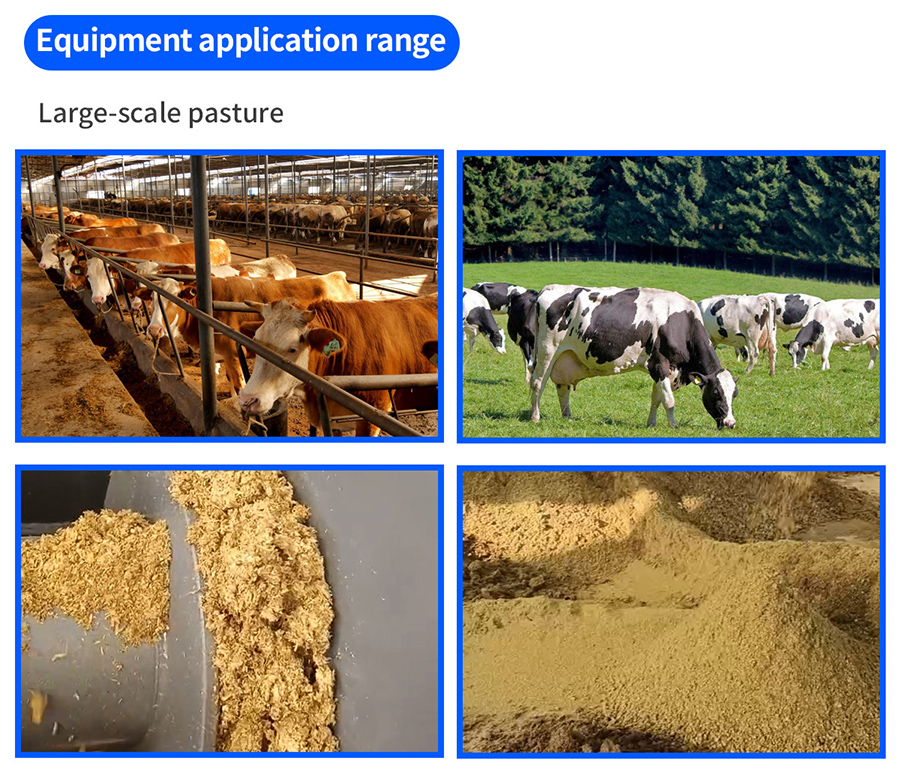
This cow manure processor is dedicated to cattle manure treatment on dairy and beef farms — from the milking parlour to the bedding yard.
Processes the daily slurry from barn flushing and scraping channels, keeping lagoons and yards manageable.
The discharged fibre (40–50% moisture) is stackable — ready for composting, bedding or bagged fertiliser.
Separated liquid is easy to pump and land-apply, or can feed a biogas digester for extra value.
Separation is usually the first and cheapest step in responsible manure management.
Removing free water and shortening storage time helps reduce methane and ammonia emissions from stored slurry.
Keeping solids out of the liquid stream lowers the risk of runoff and groundwater contamination when liquid is land-applied.
Cutting moisture cuts volume and weight, so fewer tanker loads, smaller lagoons and lower transport costs per tonne of nutrient.
Dewatered solids reach a workable moisture range for composting straight away, shortening the cycle and improving the final product.
Handling drier solids means cleaner yards, less mud and lower fly and odour pressure around housing and storage areas.
Bagged organic fertiliser, biomass pellets and bedding material can be sold or used on-farm, offsetting the machine investment.
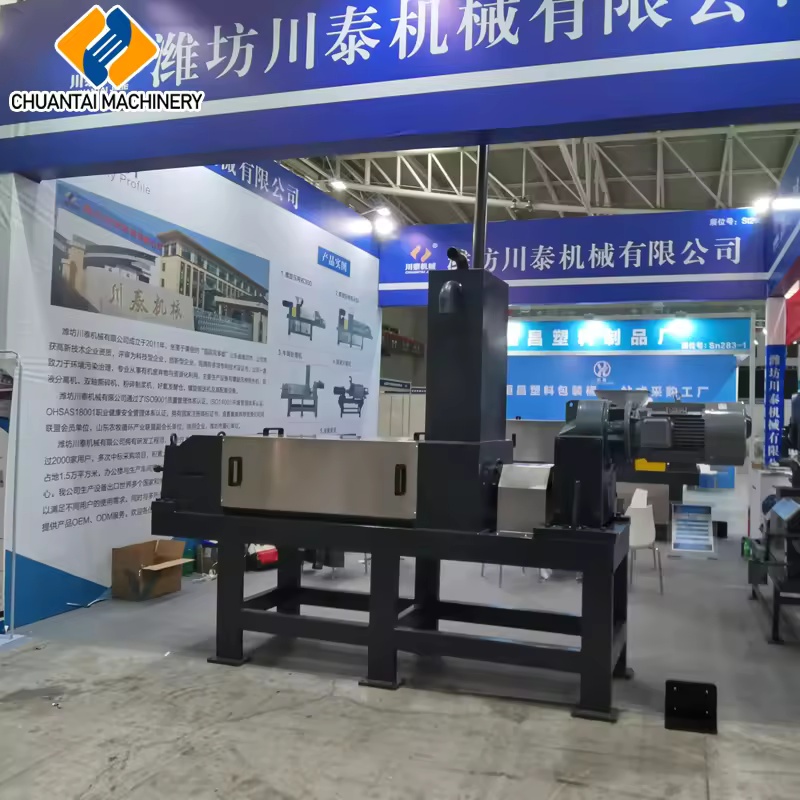
Chuantai Machinery designs and builds screw press dewatering machines in Weifang, Shandong Province, China.
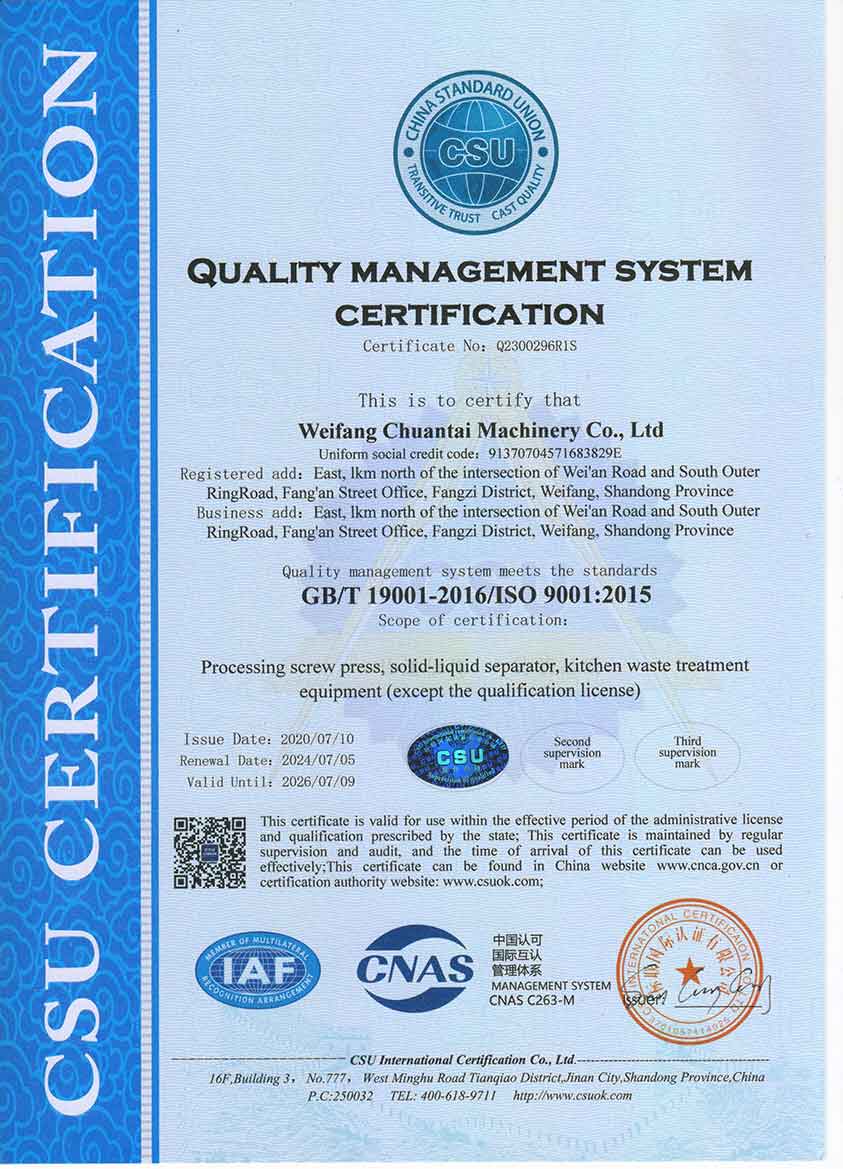
ISO 9001:2015
Quality management system
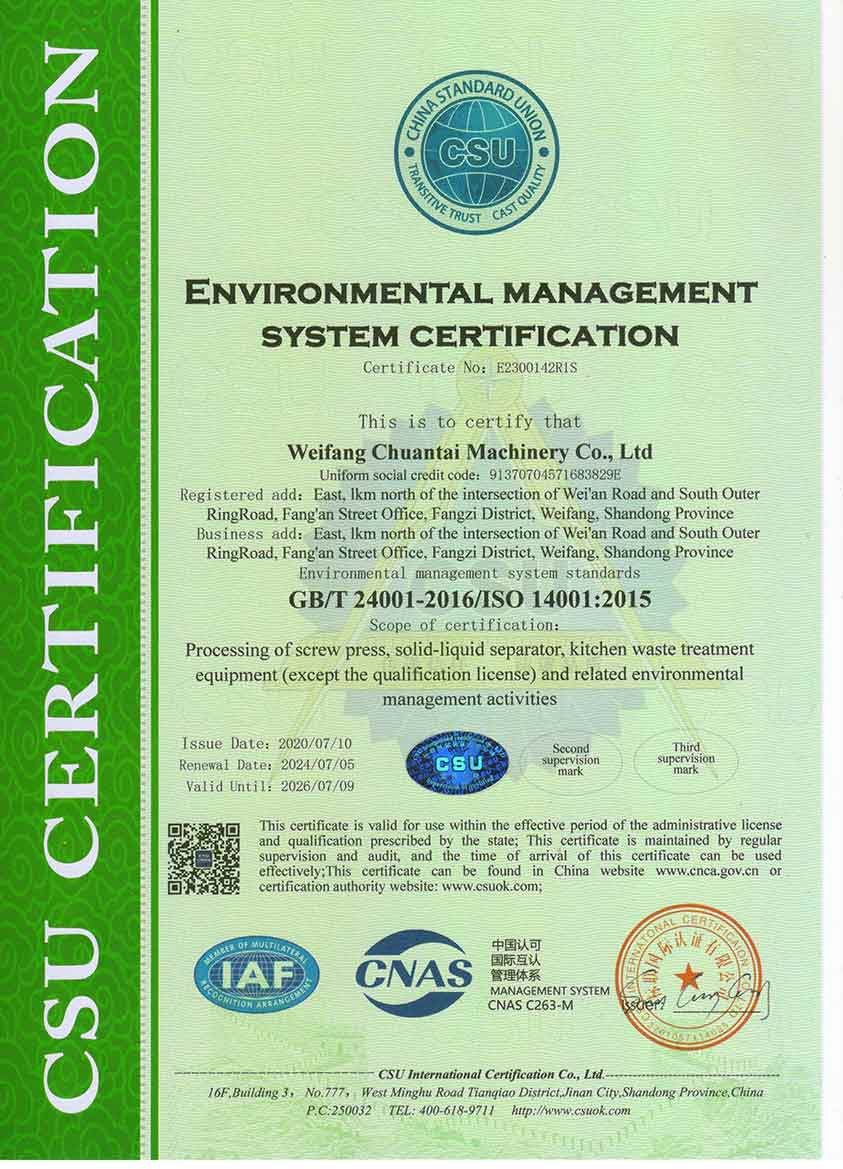
ISO 14001:2015
Environmental management
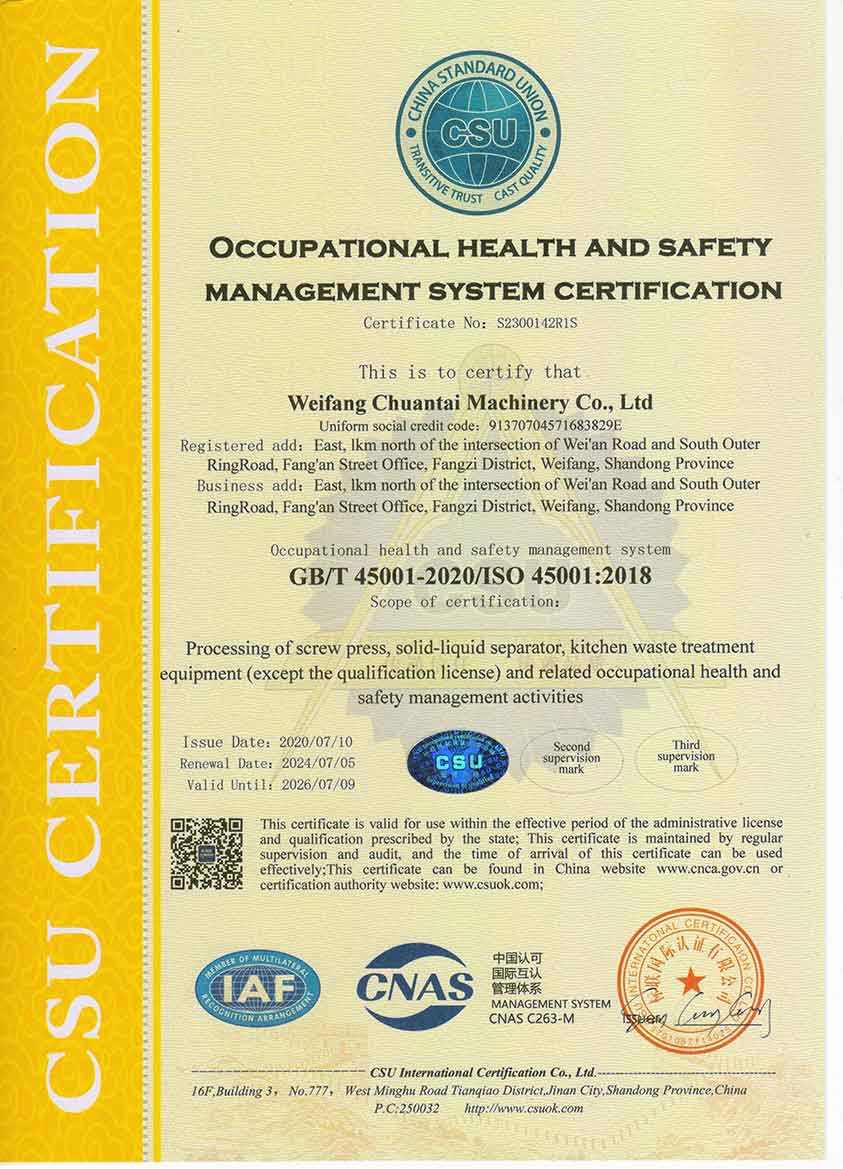
ISO 45001:2018
Occupational health & safety
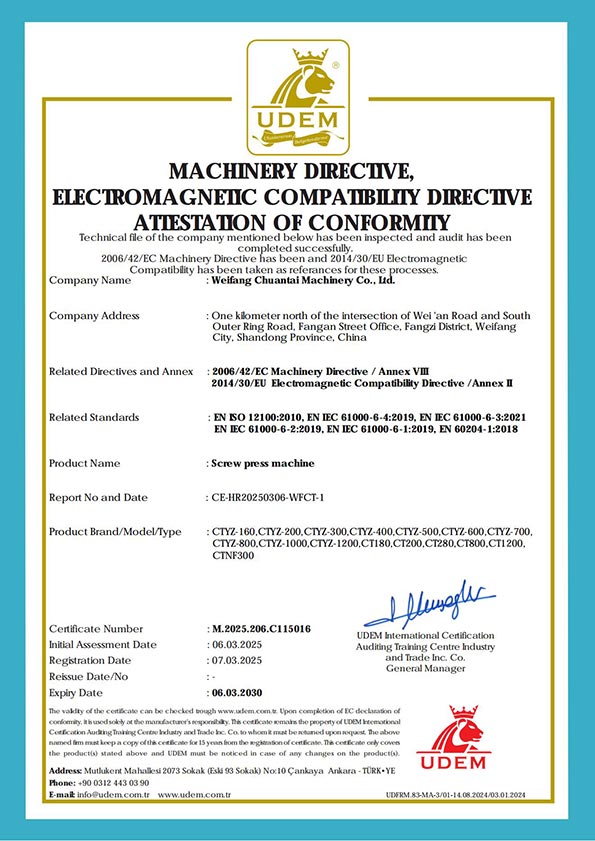
CE Declaration
EU conformity for export
We are a manufacturer with factory-direct supply. You are welcome to visit our factory in Weifang, Shandong Province, China.
We hold ISO 9001:2015 (quality management), ISO 14001:2015 (environmental management) and ISO 45001:2018 (occupational health and safety) certifications, plus a CE declaration for export markets.
Yes. Motor power, reducer type, screen aperture, pump capacity and construction materials can all be customised to match your slurry conditions, throughput target and local voltage.
Our machines carry a 1-year warranty plus lifetime technical support. Online technical support, video conference, e-mail and phone support are all available. On-site guidance can also be arranged (charged separately).
For customised products, production usually takes about 7 working days after the deposit is received. Standard models are often available sooner.
Usually 30% deposit, with the remaining 70% paid before loading.
Yes. We test customers’ material free of charge and can send photos or video of the separation result before you place an order.
We have more than 10 years of after-sales experience and have served over 2,000 clients worldwide. A 24-hour service line is available.
We have a warehouse in the City of Industry, Los Angeles, CA 91748, United States. You can choose to ship from our LA warehouse or from our China factory, whichever suits your lead time and cost.
Tell us your herd size and daily manure volume — we will recommend a model and send a quotation within 24 hours.