Dairy Manure Separator Price: What You Are Actually Paying For
Search for a dairy manure separator price and you will find everything from a few hundred dollars for a cast-iron hobby press to five figures for a full stainless production line. The spread is real, and it is not padding. Two machines that look similar in photos can differ in throughput by a factor of twenty, in build by a whole grade of steel, and in service life by a decade. This guide breaks the price down into the factors that actually drive it, explains where small and mini cow dung dewatering machines fit, and gives you a checklist for comparing quotes on the same basis.
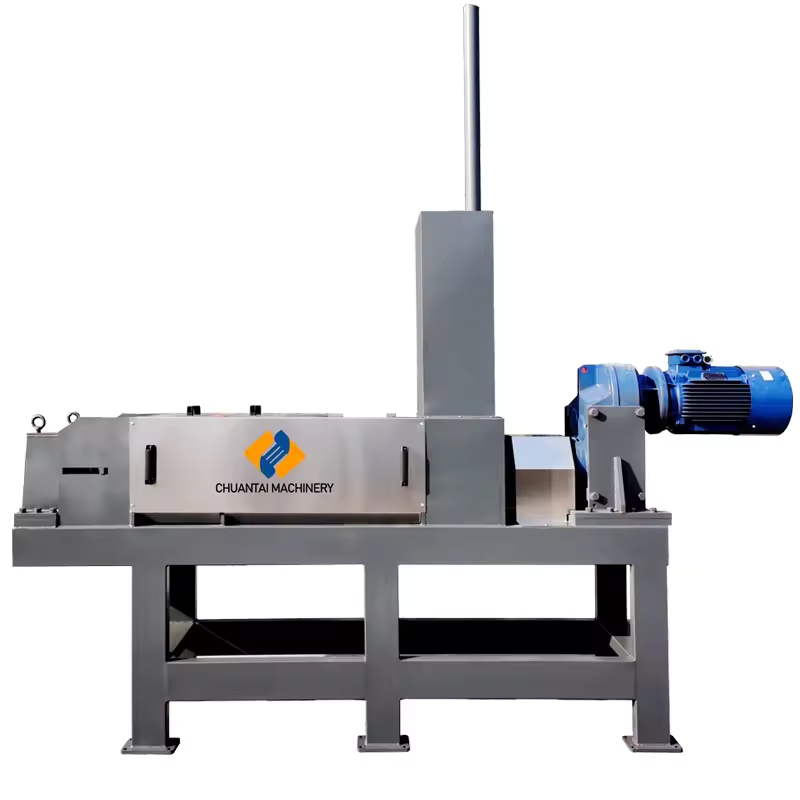
The short version: you are buying throughput, build quality and wear life. Everything else on the quotation — colour, weight, catalogue superlatives — is secondary. If you have not yet settled on the type of machine, our cow dung dewatering machine page explains how screw press separation works and what it returns; this article is about the money.
The seven factors that set the price
| Factor | What changes | Price impact |
|---|---|---|
| Frame size / throughput | Screw diameter and length, screen area, motor from 3 kW to 55 kW | The largest single factor; capacity scales in steps, not smoothly |
| Stainless grade and coverage | SS304 screw and screen as standard; SS316L for corrosive feed; some frames use carbon steel structure with stainless contact parts | Full-contact stainless costs more but is what survives slurry duty |
| Screen specification | Slot size (0.5–1.0 mm typical for cow dung), screen material, wedge-wire vs perforated sheet | Wedge wire costs more and lasts years longer |
| Drive and gearbox | Gear reduction unit quality, motor efficiency class | A cheap gearbox is the most expensive failure on the farm |
| Options and accessories | Inlet hopper, riser pump, control cabinet, conveyor or bagging stand, mobile frame with wheels | Add 10–30% depending on how much site work you want to avoid |
| Voltage and certification | 380V/50Hz standard; 220V/60Hz, 440V and CE documentation for export markets | Custom motors and documentation add cost and lead time |
| Shipping and packing | Container loading, sea vs land freight, destination port | Often 5–15% of landed cost for cross-border orders |
When two quotes differ by 40%, the reason is almost always in the first three rows. A bigger frame needs a bigger screw, a bigger screen, a bigger gearbox and a bigger motor — and those four items move together. Build quality is the second divider: slurry is abrasive and mildly corrosive, and contact parts in thin or low-grade stainless will thin out and pit within a few seasons.
Where small and mini machines fit
Not every farm needs a 20–30 m³/h production unit. The entry frames exist because most of the world’s dairy is smallholder and mid-size, and their economics are different:
- Mini / small cow dung dewatering machines (around 0.5–1 m³/h, 3 kW motor) suit farms of roughly 30–100 housed cows. They run one to two hours a day, install next to the pit without a concrete plinth, and their price is a fraction of the larger frames because every component scales down.
- Mid-range frames (2–10 m³/h) serve herds from about 100 to 500 cows and are the volume segment — which also means the widest range of build quality between competing quotes.
- Large frames (10–30 m³/h) are for centralised manure centres, large housed dairies and biogas plants, where the machine runs a full shift and the price per cubic metre matters more than the price per unit.
The useful comparison is not price per machine but price per cubic metre of slurry handled over the machine’s life. A small frame that runs 500 hours a year for ten years at a low purchase price can beat an oversized mid-range unit that runs 50 hours a year — and vice versa when a herd grows into the larger frame. Size the machine to the slurry volume, then compare prices within that size class.
Budget beyond the invoice
The machine price is the anchor, but three cost lines sit around it and belong in the budget from day one:
- Installation: a level pad, an electrical point and a pit connection. Farms that order the hopper, riser pump and control cabinet together usually install in a day; improvising on site usually costs more than the accessories would have.
- Wear parts: one spare screen and a set of screw-tip and bearing spares. This is small money that prevents the one scenario that actually costs a farm — a separator idle during the spreading season while parts ship.
- Running costs: a 3–55 kW motor for one to five hours a day is a modest electricity line, and the machine consumes no chemicals or polymers. There is no consumables bill to fear with a screw press; there is only wear to manage.
How to compare quotes on the same basis
Two quotations are only comparable if they describe the same machine. Before comparing numbers, put each quote through this checklist:
- Throughput on your material. Ask at what dry-matter content the stated m³/h was measured, and on what feed. A figure measured on thin digestate is not a cow dung figure.
- What is stainless. Screw and screen only, or the full contact path? Is the frame carbon steel or stainless? Ask for the steel grades in writing.
- Screen type and slot size. Wedge wire or perforated sheet, and which slot sizes are included or optional.
- Motor and gearbox brand class. A named gear reduction unit with local service support is worth real money on a farm.
- What is included. Hopper, pump, control cabinet, conveyor, spare seals — missing items are the classic way a quote looks cheap and lands expensive.
- Warranty terms and wear parts availability. How long, on what components, and how fast can a screen ship to your region.
- Landed cost. Ex-works price, packing, freight, import duties and any documentation, all in one figure.
A supplier who answers these seven points in writing has already separated themselves from most of the market. Our screw press buyer's guide goes deeper on the commercial side, and the dairy manure separator guide covers the technical side of choosing between screw press, roller and centrifuge types.
So what does one cost?
Fair question, honest answer: the range is wide because the machines are different products. Entry-level small cow dung dewatering machines for farms under a hundred cows start at a small fraction of the cost of a full production line, mid-range frames for 100–500 cow herds occupy the centre of the market, and large 10–30 m³/h units are quoted per project with options and freight. Rather than anchor you to a number that changes with steel prices, freight rates and configuration, we quote per farm: send the herd size, the daily slurry volume and your intended use for the solids, and you will get a configuration with a firm price — usually within one working day. Start at the cow dung dewatering machine page or go straight to the enquiry form.
How much does a small cow dung dewatering machine cost?
Entry frames in the 0.5–1 m³/h class cost a fraction of the larger production units, with the exact figure depending on stainless coverage, screen type, voltage and freight. As a rule, the small frames are priced low enough that bedding savings alone repay them on smallholder farms. Send your herd size for a firm quotation rather than relying on marketplace listings, which often omit the screen and stainless specification.
Why is one manure separator quote 40% cheaper than another?
Usually one of three things: a smaller real throughput, carbon steel where the other quote uses stainless contact parts, or missing accessories such as the pump, hopper and control cabinet. Compare the seven checklist points in this article before comparing prices.
Is a mini machine worth it for under 50 cows?
If the farm houses cows and handles slurry daily, yes — a 0.5–1 m³/h unit running an hour a day turns a daily handling problem into two usable products. For very small or grazing-only operations where slurry is already manageable, separation may not pay for itself; be honest about the volume first.
Do prices include the screen and wear parts?
A serious quotation includes the screen fitted to the machine and states spare-part prices separately. Treat any quote that does not specify screen type and slot size as incomplete.
What ongoing costs should I budget per year?
Electricity for the motor, grease, and eventually one screen plus screw-tip wear parts — typically a few years of service before the first screen replacement at normal duty. There are no chemical or polymer consumables.
Tell us your herd size and daily slurry volume, and we will quote the model that fits — without oversizing.
Contact our engineers on WhatsApp for model selection and a free quote.
Related: Cow dung dewatering machine · Dairy manure separator selection guide · CTYZ-160 small farm model · Request a quotation