Dairy Manure Separator: The Complete Guide for Dairy Farms
A dairy manure separator turns one waste problem into two usable streams: dry fibre you can bed animals on or compost, and liquid you can flush or irrigate with. Choosing the right separator technology — and sizing it to your herd — decides whether manure handling is a daily chore or a routine. This guide compares the three main technologies and walks through selection, outputs and payback.
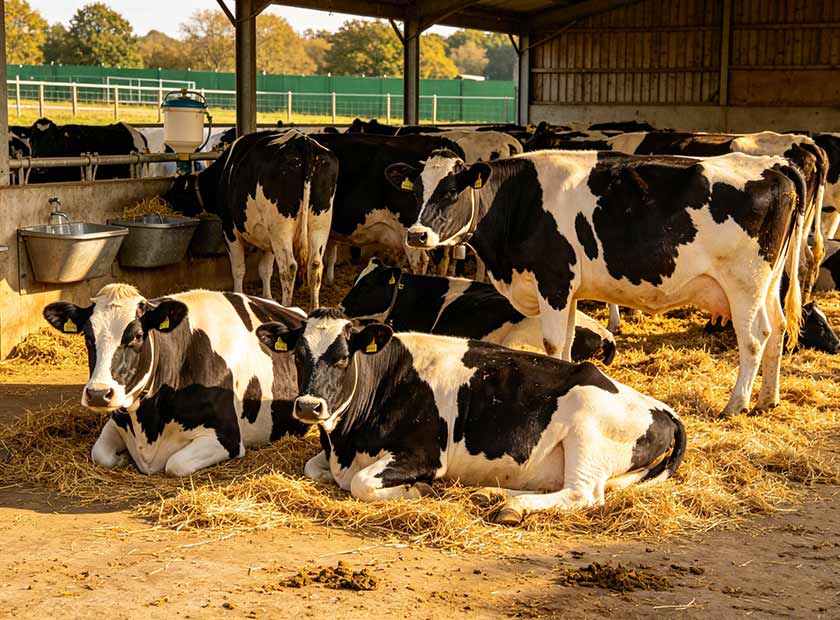
Why Separate Manure at All?
Raw dairy slurry is roughly 8-12% solids — too wet to stack, too fibrous to pump easily, and hard on lagoons. Separation solves four problems at once: it recovers bedding material you would otherwise buy, it cuts the stored volume substantially, it protects lagoons and pumps from fibre build-up, and it produces a nutrient-rich liquid fraction that irrigates evenly.
The Three Separator Technologies Compared
A screw press separator feeds slurry into a screen basket where a slowly turning spiral compresses it; liquid drains through the screen, pressed solids exit at the discharge. A roller separator squeezes slurry between counter-rotating rollers and handles very fibrous feed but produces wetter fibre. A centrifuge (decanter) separates by spin force, gives consistent dryness and high throughput, but costs several times more to buy and considerably more in power and servicing. For herds up to a few hundred cows, the screw press is the usual choice: lowest cost per cubic metre, simplest upkeep, dry-enough fibre.
Inside a Screw Press Manure Separator
The pump feeds diluted slurry into the separator; the spiral presses it against a wedge-wire screen; the compacted plug extrudes at the outlet while filtrate collects in the pan below. Key wearing parts are the screen, the spiral coating and the outlet cone. Our separators use stainless contact parts and a direct-drive gearbox without internal bearings in the slurry zone — the two failure points that plague cheap units.
The Two Outputs and What They Are Worth
Separated solids at 30-35% dry matter can be used as freestall bedding after composting or heat treatment, sold as compost feedstock, or dried further for organic fertilizer. The liquid fraction, reduced in fibre, pumps and irrigates without clogging, feeds anaerobic digesters efficiently, and carries most of the nitrogen and potash back to the fields as fertigation.
Sizing by Herd and Wash Water
Count slurry, not cows: a 100-cow herd with flush barns can move 10-15 m³/day in wash water alone. Size the separator so the daily volume clears in a two to three hour window — separators that run all day never get maintained. For herd-specific sizing with washing-method and voltage details, send us your figures; we match the model and return a calculation within 24 hours.
Payback: Where the Money Comes From
Four lines add up: bought-in bedding replaced by own fibre (often the largest), reduced hauling and storage volume, avoided lagoon dredging, and fertilizer value retained on-farm. For a deeper cost walkthrough see our screw press manure separator for dairy farms guide, and for machine options see the cow dung dewatering machine page.
Frequently Asked Questions
Q: What is the best manure separator for a dairy farm?
A: For most dairy herds a screw press separator offers a strong balance: continuous operation, low power draw, simple maintenance and dry-enough solids for bedding. Roller drums and centrifuges suit very large operations or special slurry conditions, but both cost more to buy and run per cubic metre.
Q: Can separated dairy solids be used as bedding?
A: Yes, when processed properly. Screw-pressed solids at 30-35% dry matter, then composted or heat-treated, are widely used as freestall bedding. Standard biosecurity practice applies: monitor temperature during composting and keep the bed dry.
Q: How dry do the solids come out of a screw press?
A: Typically 30-35% dry matter on dairy slurry, depending on feed consistency and screen size. Finer screens produce drier fibre at lower throughput; most farms balance around a 1-2 mm screen.
Q: How do I size a separator for my herd?
A: Rule of thumb: a 100-cow milking herd produces roughly 6-10 cubic metres of slurry per day including wash water. Pick a separator whose hourly capacity lets you process the daily volume in two or three hours of running, not the whole day.
Not sure which separator suits your herd?
Send us your daily slurry volume, barn flushing method and voltage, and our engineers will size a dairy manure separator within 24 hours. Or browse all screw press models.