Double Shaft Shredder for Sale: 7 Checks Before You Place an Order
When buyers search for a double shaft shredder for sale, most listings look identical on the surface: two rotors, a feed hopper and a steel cabinet. The differences that decide whether a machine runs for ten years or fails in its first season are hidden in the blade steel, the gearbox layout and the way the manufacturer protects its bearings. This industrial shredder buyers guide walks you through seven practical checks that separate a serious manufacturer from a reseller with a catalogue.
Checks 1–2: Material Testing and Blade Steel
1. Run a shredding test with your real material
Never place an order based on a specification sheet alone. Reputable manufacturers run a free test with a sample of your actual waste — scrap metal, plastic lumps, tyres, drums, wood or mixed household refuse — and send you a video recorded in their own factory workshop, showing the feed process and output particle size. Ask for the measured throughput at that particle size. If a supplier refuses a test, or cannot show their own production floor on camera, treat it as a warning sign before you buy a double shaft shredder.
2. Ask exactly which blade steel the machine uses
Blade material determines cutting life more than any other component. Ask which steel the blades are made from and how they are heat treated:
- 9CrSi — a general-purpose alloy tool steel with good toughness, suitable for plastics, wood and light scrap.
- Cr12MoV — greater wear resistance for abrasive materials and continuous heavy-duty operation.
- H13 — excellent toughness for thick-walled metal, drums and high-shock loads.
Also ask about the heat treatment process (quenching followed by tempering) and the working hardness, typically around HRC 55–58. Finally, confirm whether blades can be refurbished: a well-designed blade can be re-welded and re-machined after wear instead of being scrapped, which cuts long-term operating costs substantially.
Checks 3–4: Drive System and Chamber Protection
3. Confirm independent dual drive
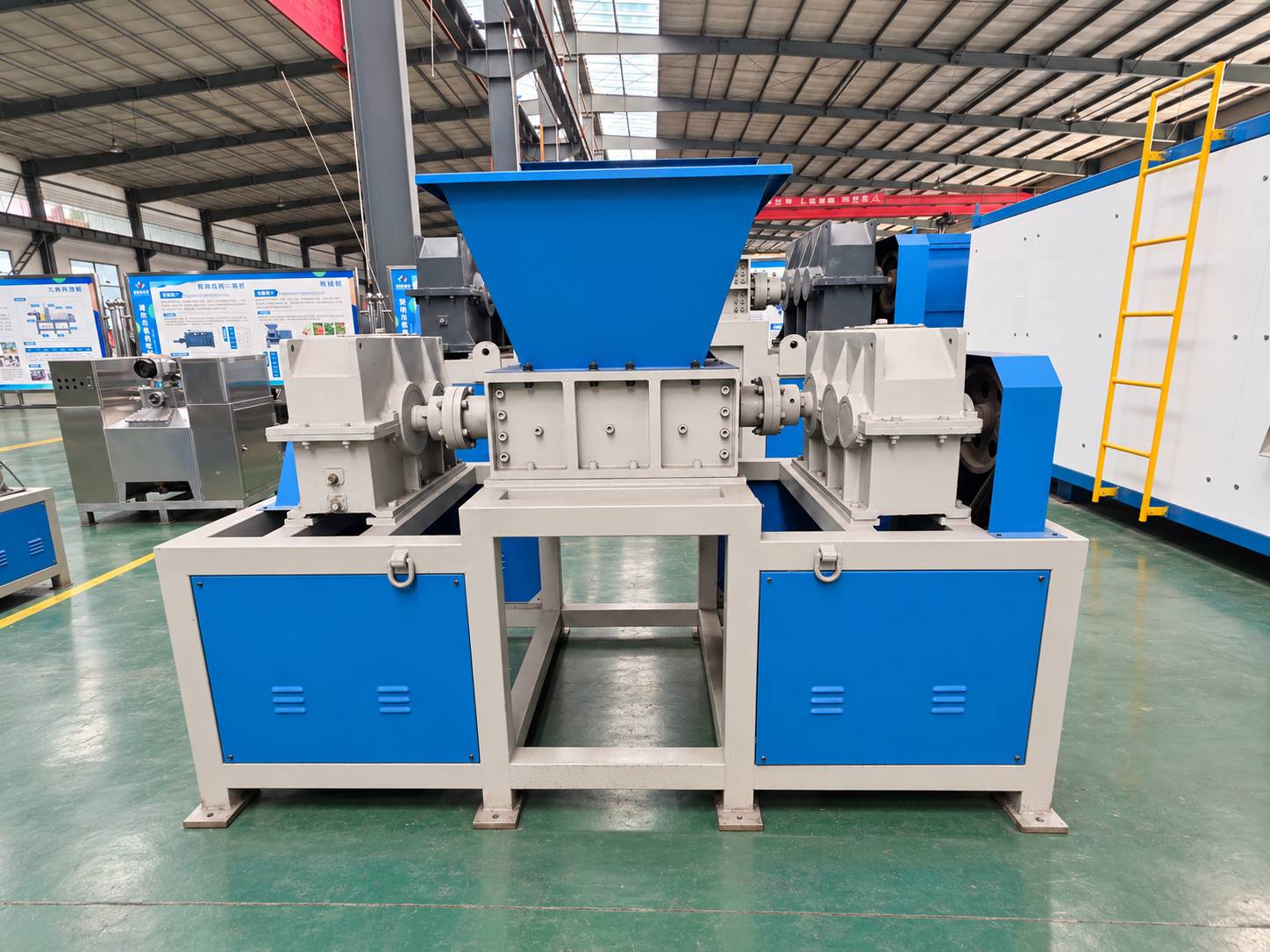
In a properly engineered double shaft shredder, each rotor is driven by its own motor through its own gearbox. Some low-cost machines drive both rotors from a single reducer with meshing gears placed close to the shredding chamber, where shock loads and debris cause early failure. Ask for the reducer brand and ratio, the motor power per rotor, and confirm the layout is genuinely independent dual drive so one side can never overload the other.
4. Inspect the chamber design and bearing protection
Look closely at where the shredding chamber meets the bearing housing. Dust, fines and liquids generated during shredding will migrate along the rotor shaft straight into the bearings unless the design blocks the path. A robust machine uses an isolation plate — a spacer and sealing plate between the chamber wall and the bearing seat — combined with sealed, grease-lubricated bearing housings and external lubrication points. Ask for a cross-section photo or an exploded drawing of the chamber.
Checks 5–6: Controls, Overload Protection and After-Sales
5. Check the PLC and automatic reverse function
A modern double shaft shredder should be controlled by a PLC cabinet with overload detection. When a jam pushes the motor current above the set limit, the control system should automatically stop, reverse both rotors to clear the material, and then resume shredding. Machines that only offer a manual reverse button, or that simply trip the main breaker, will cost you hours of downtime. Confirm the electrical components come from recognisable brands and that voltage and frequency match your local supply.
6. Clarify spare parts supply and warranty terms
Blades are wear parts, so ask three questions before signing: Can each blade be replaced individually, or must the complete rotor be removed? Are replacement blades kept in stock? How fast can they ship? A dependable manufacturer designs blades so each one can be changed separately, keeps spares on the shelf and delivers them within about 30 days of an order. Confirm the warranty in writing — one year on the machine and its core components is a fair, standard baseline — and ask whether remote video support is included for commissioning and troubleshooting.
Check 7: Audit the Factory Before You Pay
7. Visit in person or request a live video audit
A shredder is a capital purchase, so a factory audit is worth the trip. Walk the workshop and check whether frames are cut and welded in-house, whether machining of the chamber and blade seats happens on site, and how final assembly and test runs are organised. If travel is not practical, schedule a live video call and ask the host to walk through specific stations rather than a prepared clip. Once you have seen how the machines are actually built, comparing the models on our double shaft shredder product page becomes far easier.
Before You Order
Placing an order for industrial equipment should follow the same discipline as any major investment: test first, inspect the components that wear, verify the protection systems, and audit the builder. A supplier who passes all seven checks in this industrial shredder buyers guide will still be answering your calls years after delivery. For more practical guides like this one, browse the Chuantai Machinery blog, or see how our cow dung dewatering machine range applies the same engineering standards to organic waste processing.
Frequently Asked Questions
What materials can a double shaft shredder process?
A double shaft shredder handles tyres, plastic lumps and drums, metal scrap, wood pallets, household waste and bulky industrial refuse. Its two low-speed, high-torque rotors shear and tear material regardless of hardness, and throughput depends on the material type and the required output particle size.
How much does a double shaft shredder cost?
Price depends on chamber size, motor power, blade steel and drive layout. Rather than comparing price alone, compare the seven checks in this guide: a machine with independent dual drive, bearing isolation plates and refurbishable blades costs more upfront but far less over its service life.
What is the difference between a single shaft and a double shaft shredder?
A single shaft shredder cuts with one rotor against a fixed screen and produces uniform small particles, which suits plastics and wood recycling lines. A double shaft shredder uses two counter-rotating rotors to shear and tear material, tolerates bulky and mixed waste without pre-treatment, and produces larger output pieces for the pre-shredding stage.
How often do the blades need maintenance?
It depends on material abrasiveness and operating hours. Inspect the blades after the first 200 hours, then set a fixed interval based on wear. Blades can be swapped between positions to even out wear, and worn blades can be refurbished by re-welding and re-machining instead of being replaced.
Ready to compare a double shaft shredder for sale that passes all seven checks?
Browse our double shaft shredder for sale range, view all products, or contact us on WhatsApp for a free material test and quotation.