Double Shaft Shredder for Municipal Solid Waste: Pre-Shredding That Works
Municipal solid waste is one of the least predictable materials a processing plant can handle. In a single shift, an MSW line may receive bagged household garbage, sofas, mattresses, woven sacks, textiles, plastic drums and garden branches — often mixed together and often contaminated with metal. A double shaft shredder for municipal solid waste is engineered for exactly this variability. In this article we explain why two counter-rotating shafts outperform other designs on MSW, where pre-shredding fits in the treatment chain, and how to choose between our CTSS-800, CTSS-1000 and CTSS-1200 models.
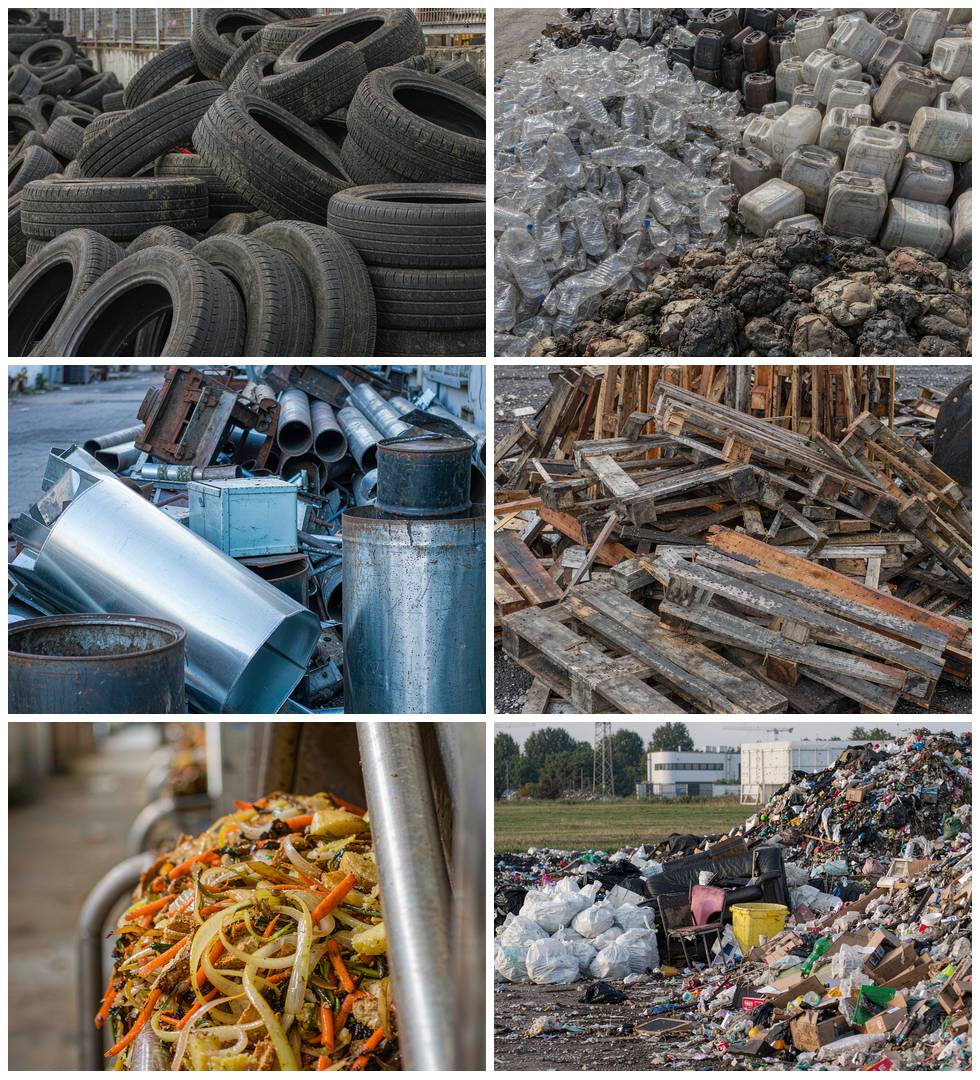
Why Municipal Solid Waste Destroys Ordinary Shredders
MSW is not one material but hundreds. Food waste arrives sealed inside plastic bags that stretch and wrap around rotating parts. Bulky furniture and mattresses exceed the intake of most machines. Woven bags, films and textiles are tough, elastic and notorious for winding around a single shaft. Mixed in with all of this are hard, abrasive items — metal cans, construction debris, stones — that arrive unannounced.
High-speed single-shaft cutters struggle under these conditions: their screens blind with wet, sticky waste, their knives wear quickly against abrasive contaminants, and elastic materials wind and stall the rotor. A municipal solid waste shredding machine of the double shaft type takes a different approach. Two toothed shafts rotate slowly in opposite directions, gripping material between the cutters and tearing it apart with high torque rather than high speed. There is no screen to blind, bulky items can be charged whole, and the slow running speed keeps noise, dust and vibration low.
Where Pre-Shredding Fits in the MSW Processing Chain
Pre-shredding is the first mechanical step in almost every modern MSW treatment line, and it serves four main purposes:
- Volume reduction before sorting — shredding opens garbage bags and reduces waste to a uniform, manageable size, so trommel screens, air classifiers, magnetic separators and optical sorters can actually separate materials instead of processing tangled lumps.
- RDF and SRF production — refuse-derived fuel must be shredded to a controlled size (typically 50–300 mm) before drying, pelletizing or baling. Consistent particle size means consistent calorific value for cement kilns and power plants.
- Landfill volume reduction — shredded waste compacts far more densely, extending the working life of existing landfill cells and cutting the number of collection trips.
- Waste-to-energy plant feeding — incineration lines run more stably when the crane feeds material of uniform size, with fewer bridging problems in hoppers and more complete combustion.
In each of these scenarios the shredder sits at the head of the line. If it stops, everything downstream stops with it — which is why reliability matters more here than at any other stage.
Output Size and the Downstream Process
What comes out of the shredder determines what your downstream equipment can do. Output size on a double shaft machine is controlled mainly by blade thickness and the cutter hook profile: thicker blades produce coarser chips for volume reduction, while thinner blades produce the finer, more homogeneous material that RDF pelletizing and baling lines need. Because there is no screen basket, output is a controlled strip rather than a powder — ideal for separation, since flattened and opened waste presents far more surface area to air classifiers, eddy current separators and ballistic sorters.
The shredded stream also flows onward more reliably. Conveyor belts, bunkers and feeding systems handle regular, opened material far better than raw bagged waste. You can see typical material combinations and line layouts on our Applications page.
Choosing the Right Model: CTSS-800, CTSS-1000 and CTSS-1200
Model selection starts with daily tonnage and chamber size, because the machine must swallow your largest items whole. Our double shaft shredder range covers three practical levels for MSW duty:
- CTSS-800 (800×600 mm chamber, 30 kW) — suited to small transfer stations and town-level sorting plants, with an indicative MSW throughput of roughly 1–3 t/h.
- CTSS-1000 (1000×600 mm chamber, 60 kW) — a solid mid-size choice for district sorting lines and RDF preparation, indicating roughly 3–6 t/h on mixed waste.
- CTSS-1200 (1200×800 mm chamber, 74 kW) — designed for high-volume waste-to-energy and large RDF plants, indicating roughly 5–10 t/h.
These figures are indicative — real throughput varies with waste composition, moisture and desired output size, so we confirm the number with a test on your actual material. All three models use 9CrSi alloy blades, gearbox-driven low-speed shafts and a PLC electrical control system with overload protection: when motor current rises above the set limit, the controller stops and automatically reverses both shafts to release the obstruction, then resumes shredding. For unsorted MSW that regularly hides metal and stones, this automatic reverse function is the difference between a brief pause and a day of downtime.
Frequently Asked Questions
Can one double shaft shredder handle both bagged household waste and bulky furniture?
Yes. The wide shredding chamber accepts mattresses, sofas and whole bags without pre-sorting, and the low-speed, high-torque shafts tear tough textiles and films instead of jamming on them. This is exactly why a double shaft shredder for municipal solid waste differs from a high-speed single-shaft cutter.
What output size can we achieve for RDF or SRF production?
Output size is set mainly by blade thickness and hook design, typically between 50 and 300 mm for MSW work. Choose a finer blade spec when feeding an RDF pelletizing or baling line, and a coarser spec when the goal is volume reduction before landfill or sorting.
What happens if a piece of metal or a hard object enters the chamber?
The PLC control system monitors motor load. When current rises above the set limit, the machine stops and automatically reverses both shafts to release the obstruction, then resumes shredding. This overload protection prevents blade and gearbox damage when unsorted MSW carries tramp metal.
How do I size a municipal solid waste shredding machine for my daily tonnage?
Send us your waste composition, daily tonnage and planned working hours. We recommend CTSS-800 for small transfer stations, CTSS-1000 for mid-size sorting plants, and CTSS-1200 for high-volume lines, and we can run a material test on your actual waste to confirm the throughput figure.
Looking for a double shaft shredder for municipal solid waste?
Browse our full product range or contact our engineers for model selection, a material test and a free quote.