Screw Press Dewatering for Fruit and Vegetable Waste
Fruit and vegetable waste is roughly nine parts water and one part everything else. That single fact explains why disposal is expensive: you are paying to transport, store and treat water. A supermarket chain discarding 20 tonnes of unsold produce a week is moving 18 tonnes of water through its logistics chain, and a packing house paying landfill gate fees by weight is paying mostly for moisture.
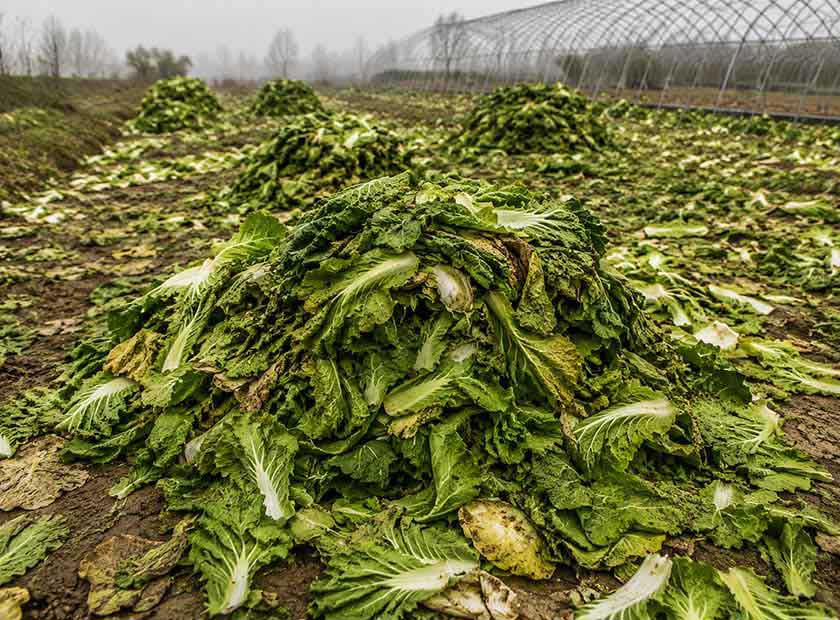
Screw press dewatering changes that ratio mechanically, without heat and without chemicals. On most fruit and vegetable streams it removes 50–70% of the mass in a single pass, producing a stackable solid that can be composted, digested or fed, and a liquid that can go to irrigation or to a wastewater plant. This article sets out what the machine can and cannot do on this material family, how to size it for a season that peaks hard, and where the costs and returns actually sit.
Why fruit and vegetable waste needs dewatering before anything else
Fresh produce residue sits at 80–92% moisture. At that level it behaves as a liquid in a trailer, it leaches within hours of being piled, and it begins anaerobic decomposition almost immediately, producing leachate with a very high biological oxygen demand. Transporting it is inefficient, storing it is unpleasant, and landfilling it is increasingly expensive and in some markets no longer permitted.
Drying it with heat is technically possible and usually uneconomic, because the latent heat required to evaporate that much water dwarfs the value of the output. Mechanical dewatering is the cheaper intervention: it does not remove all the water, but it removes the free water that makes the material unmanageable, and it does so at a fraction of the energy cost of thermal drying.
| Stream | Typical feed TS | Fibre content | Dewatering difficulty |
|---|---|---|---|
| Culled whole fruit (citrus, apple, tomato) | 10–18% | Medium | Easy to moderate; skin resists compression |
| Peel and trimming from processing | 12–20% | Medium to high | Easy; good cake formation |
| Leafy vegetable trim and core | 5–9% | Low | Hard; cake forms slowly and remains wet |
| Pulp and press cake from juice lines | 15–25% | High | Easy; already partly dewatered |
| Mixed retail and market waste | 8–14% | Variable | Moderate; contamination and packaging are the main issues |
| Root vegetable peel and wash solids | 6–12% | Low to medium | Moderate; high sand and soil content |
The pattern is consistent: the more fibre and structure a stream contains, the better it dewaters. Leafy trim and wash solids are the difficult end of the range, and they need a finer screen, a longer drainage section and, often, a drier material blended in to help the cake form.
How a screw press handles high-moisture produce waste
The machine is deliberately uncomplicated. Waste enters a hopper, is conveyed by a rotating screw through a cylindrical wedge-wire screen, and is compressed as the screw pitch narrows and the discharge restriction increases. Free water drains through the screen in the first section; the cake is pressed in the last section and exits as a continuous ribbon.
Four design points matter on produce waste specifically:
- A long drainage section. Produce waste arrives very wet. Most of the water leaves before any pressure is applied, so open screen area and length in the first half of the machine do more work than maximum compression at the end.
- A moderate compression profile. Over-compressing soft, sugar-rich material produces a paste that blinds the screen and raises torque without improving dryness. Produce waste usually wants light-to-medium compression, not the aggressive setting used on dry, fibrous material.
- Anti-slip screw geometry. Wet peel and pulp can rotate with the screw instead of being conveyed. A variable-pitch flight and a suitable surface finish keep the material moving.
- Fast cleaning access. Produce residue ferments quickly. A machine that can be opened and washed in fifteen minutes will be washed; one that takes an hour will not.
The screen aperture is the main adjustable variable. A 0.5–0.75 mm wedge-wire screen retains enough fibre to form a cake while letting the liquid pass. Going finer improves filtrate quality but reduces capacity sharply on low-fibre material; going coarser increases throughput but sends fibre to the liquid stream and produces a wetter cake.
Performance: what reduction can you expect?
Published figures for produce waste dewatering vary widely because feed composition varies widely. The ranges below reflect what a properly set screw press achieves across the common streams, and they are deliberately conservative.
| Feed TS | Cake TS achieved | Mass reduction | Example stream |
|---|---|---|---|
| 18–25% | 35–45% | 40–55% | Juice press cake, citrus peel |
| 12–18% | 30–40% | 45–60% | Apple and tomato pomace, mixed peel |
| 8–12% | 25–35% | 50–65% | Mixed market waste, culled fruit |
| 5–8% | 18–28% | 45–60% | Leafy trim, wash solids |
Read the mass reduction column as the commercial headline. Halving the mass of waste halves the number of truck movements, halves the gate fees where charging is by weight, and reduces the leachate produced in storage. The cake still contains 55–75% water, so it is a stabilised solid rather than a dry product — which is exactly what composting and digestion need.
Three mistakes that limit performance on produce waste
1. Pressing too hard
Operators often respond to a wet cake by increasing back pressure. On fibrous material that helps. On soft produce waste it usually makes things worse: the cake compacts into a low-permeability layer, water can no longer escape, and the machine extrudes a paste at higher torque and lower throughput. The correct response to a wet cake on this material is a finer screen, a slower screw speed or a longer drainage section — not more pressure.
2. Ignoring acidity and essential oils
Citrus peel, apple pomace, pineapple and tomato residue are acidic, commonly pH 3–4.5. At that pH, standard carbon steel fasteners and untreated frames corrode quickly, and some elastomers swell or harden. Citrus peel adds a further complication: d-limonene attacks many common seal materials. Specify SS304 as a minimum on all wetted parts for produce waste, move to SS316L where chloride or cleaning chemicals are present, and confirm seal compatibility with the actual oil content rather than a generic food-grade claim.
3. Feeding packaging and contamination
Mixed retail waste arrives in crates, bags, cling film and occasionally with labels and ties. A screw press will not process these, and a plastic bag wrapped around the screw will stop the machine. A manual sorting station or a coarse trommel ahead of the hopper is not optional on retail-derived waste; it is part of the process design.
What to do with the two output streams
The economics of dewatering depend on finding a use for both fractions. Farms and processors that treat the solid as waste and the liquid as effluent capture only half the value.
The solid fraction
- Compost. The most common route. Cake at 30–40% TS is close to the ideal starting moisture for windrow composting, and the sugar and nutrient content supports rapid heating. Bulking agent may still be needed in wet seasons.
- Anaerobic digestion. Produce waste has a high methane potential, and dewatering produces a pumpable feedstock with a controllable solids load. The liquid fraction is often the better digester feed, with the solid fraction going to a high-solids digester or to compost.
- Animal feed. Some fruit and vegetable residues are suitable for feed, subject to local rules on catering and retail waste. This route usually requires drying or ensiling and is regulated more tightly than composting.
- Soil amendment or land application. Where permitted, the cake can be applied to land as an organic amendment, replacing part of the fertiliser budget.
The liquid fraction
The liquid carries dissolved sugars, organic acids, nitrogen and potassium, and a small amount of fine solids. Its fate depends on the site: irrigation to nearby land, feed to a digester, discharge to a wastewater treatment plant under a trade effluent agreement, or recycle back into a washing process where the quality allows. Check the discharge limits before you design the drain, because a high-BOD liquid that cannot be discharged legally turns a good dewatering project into an expensive problem.
Sizing for a season, not an average
Produce waste is seasonal in a way that most industrial waste is not. A packing house may process ten times more in harvest than out of it, and a market may double its waste volume around holidays. Sizing on the annual average produces a machine that is overwhelmed exactly when the problem is worst.
The practical approach is to size on the peak month, then check whether the machine can be run longer hours in that month rather than buying capacity that sits idle for nine months. Two shifts in harvest and one shift out of season often costs less than a larger machine.
| Daily waste volume | Operating pattern | Recommended model | Notes |
|---|---|---|---|
| 1–4 m³ | One shift | CTYZ-160 | Small market or restaurant group |
| 4–12 m³ | One to two shifts | CTYZ-200 | Small packing house, produce market |
| 10–25 m³ | Two shifts in season | CTYZ-300 | Mid-size processor or municipal collection point |
| 25–50 m³ | Two to three shifts | CTYZ-400 | Large packing house, food processing plant |
| 50–100 m³ | Continuous | CTYZ-500 | Regional food waste hub |
| Over 100 m³ | Continuous | CTYZ-600 or multiple units | Centralised processing facility |
Hygiene, washdown and corrosion
Produce waste ferments within hours in warm weather. The design consequences are practical rather than theoretical:
- Slope every surface that the material touches so that liquid drains to a collection point rather than pooling on the frame.
- Provide a wash-down point within reach of the screen, with enough pressure to clear fibre from the wedge wire.
- Avoid open bearings and crevices where residue can accumulate; a smooth, accessible machine is a hygienic machine.
- Provide ventilation if the machine is indoors. The liquid fraction develops odour quickly, and a closed room without air changes will become a source of complaints.
- Plan for a wash water capture channel, because wash water from a produce line carries a high organic load and should not go straight to a surface drain.
Economics: a packing house example
A packing house handling 30 tonnes of mixed fruit and vegetable waste per day at 12% TS, paying a disposal contractor per tonne and running six days a week, has three cost lines that dewatering changes: transport, gate fees and storage handling.
| Item | Before dewatering | After dewatering | Effect |
|---|---|---|---|
| Daily mass leaving site | 30 t | 12–15 t | Truck movements roughly halved |
| Disposal charge base | 30 t at gate fee | 13 t at gate fee, plus compost or digestate route | Gate fee reduced proportionally |
| Storage | Wet bins, leachate, frequent collection | Stackable cake, fewer collections | Lower handling and odour cost |
| Power | None | 0.5–1.5 kWh per m³ of feed | Modest, typically a small share of the saving |
| Wear parts | None | Screen replacement on an interval set by abrasiveness | Budget from year one |
| Output value | None | Compost or digestate feedstock, or a soil amendment | Offsets part of the operating cost |
The case is strongest where gate fees or haulage distance are high, and weakest where waste is currently spread on nearby land at negligible cost. In the second case, the justification is usually leachate control, odour or storage capacity rather than direct cash saving — which is still a valid reason, but a different business case.
Frequently asked questions
Can a screw press dewater leafy vegetable waste?
It can, but with lower performance than fibrous streams. Leafy trim at 5–9% TS forms a cake slowly, and the resulting solid is often only 18–28% TS. A finer screen and a slower screw speed help, and blending in a drier fibrous material is the most effective way to improve the result.
How much volume reduction should I expect?
On mixed fruit and vegetable waste at 8–14% TS, expect 50–65% mass reduction. On already-pressed pulp or peel at 18–25% TS, expect 40–55%. The solid fraction remains moist, so reduction is in mass and handling, not in complete drying.
Does the machine need flocculant?
Normally no. Fruit and vegetable waste contains enough fibre to form a cake without polymer, which is one of the advantages of a screw press on this material. Flocculant is only considered on very fine, low-fibre streams such as wash water with high suspended solids.
How do I deal with the liquid fraction?
It can be irrigated to land, fed to a digester, discharged to a wastewater plant under a trade effluent agreement, or recycled to washing where quality permits. Check the permitted discharge limits first, because the liquid carries a high organic load.
Will citrus peel damage the machine?
Not if the construction is right. Citrus is acidic and contains d-limonene, which attacks some common seal materials. Specify stainless wetted parts and seals rated for oil exposure, and confirm compatibility with the actual fruit mix rather than assuming a food-grade grade is sufficient.
How often does the screen need replacing?
It depends on abrasiveness and on how consistently the machine is washed. On produce waste with soil and sand, a screen may last 6–18 months. Keep a spare and treat replacement as scheduled maintenance rather than a breakdown repair.
Final thoughts
Fruit and vegetable waste dewatering is one of the clearer returns available in food waste management, because the material dewaters well, needs no chemicals, and produces two streams with genuine uses. The engineering discipline is in the details: match the screen and compression to the stream, do not over-press soft material, specify for acidity and oils, design for fast cleaning, and size for the peak month rather than the annual average.
If you can send a 20–50 kg sample of your waste, we will run a trial and report feed solids, throughput, cake solids and filtrate quality, so that the model recommendation is based on your material rather than on a table.
Send us a sample of your fruit and vegetable waste and we will run a dewatering trial.
Contact our engineers on WhatsApp for model selection and a free quote.
Related: Screw press dewatering machine · Vegetable waste dewatering · Fruit juice residue dewatering · Request a waste trial