Twin Shaft Shredder vs Single Shaft Shredder: Which One Fits Your Line?
Choosing between a twin shaft shredder and a single shaft shredder is one of the most common questions we hear from recycling and waste processing plants. The two machines look similar, but they cut material in fundamentally different ways — and that difference decides what you can feed in, what comes out, and how much maintenance you will do. This guide compares the twin shaft shredder vs single shaft shredder across working principle, materials, output size control, capacity and upkeep, and ends with clear selection advice.
How the Two Shredders Work
A single shaft shredder (often called a single rotor shredder) uses one rotor fitted with knives that cut against fixed bed knives. Material is pressed toward the rotor by a hydraulic pusher ram, which cycles back and forth to keep the cutting chamber loaded. Below the rotor sits a mesh screen: particles stay inside the chamber until they are small enough to pass through, which is why a single shaft machine produces a relatively uniform, small particle size.
A double shaft shredder (also sold as a twin shaft or two shaft shredder) works differently. Two shafts fitted with multi-claw blades rotate slowly toward each other, shearing and tearing the material between the interleaving blades. There is no screen and no pusher ram — once a piece is small enough to fall between the blades, it drops out. Because the shafts turn at a low speed (our CTSS series runs at around 15–30 rpm) with large torque, the machine grabs tough, tangled, bulky waste that a single rotor struggles with.
Which Materials Suit Each Shredder
The single shaft design suits cleaner, softer, more predictable materials: rigid plastic lumps and pipes, wood blocks and edges, thin sheet scrap, paper rolls and pre-sorted industrial offcuts. Because the hydraulic ram feeds material into a closed cutting chamber, the feedstock should not contain long, flexible items that wrap around the rotor, and unshreddable tramp metal should be removed in advance.
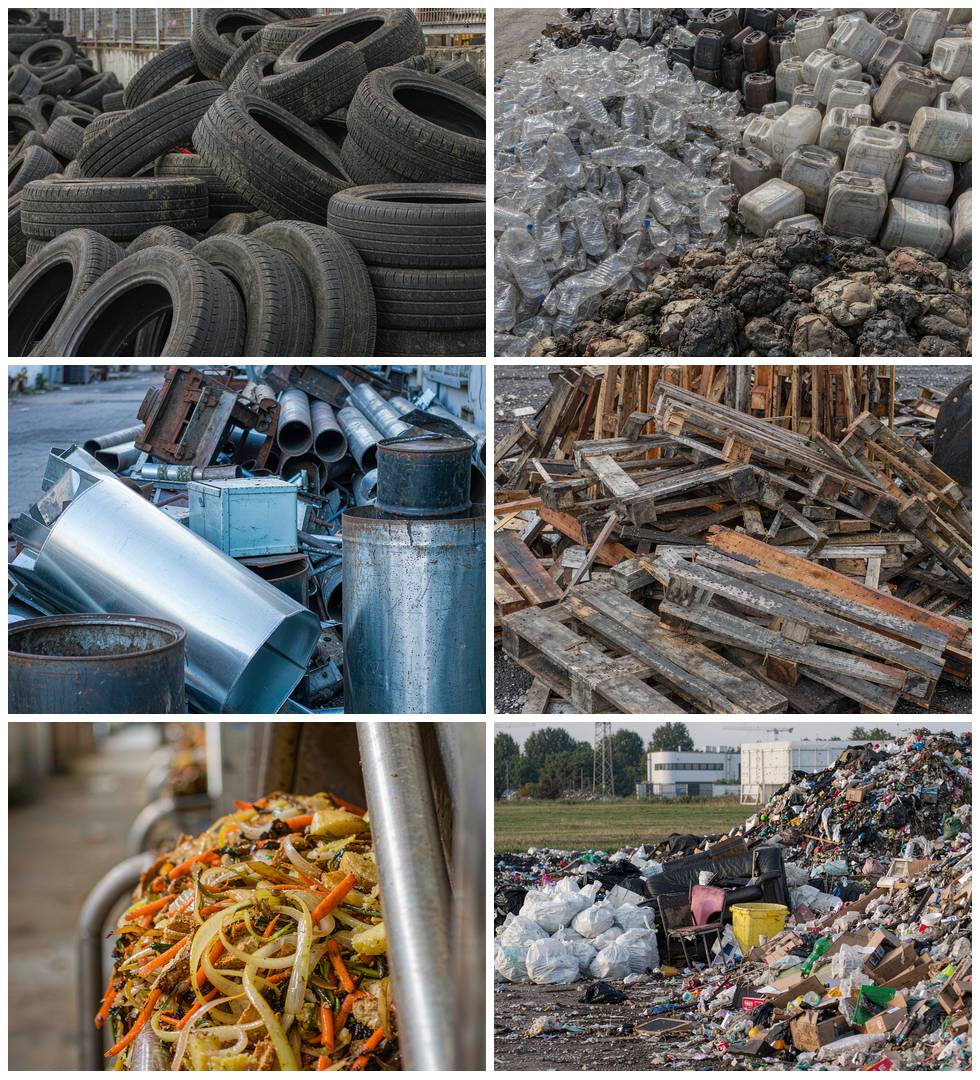
The double shaft design is built for harder, bulkier and mixed waste: whole tires, plastic film and woven bags, drums and IBC containers, wood pallets with nails, household and commercial waste, kitchen waste, appliances and light metal scrap. The low-speed, high-torque shearing action tolerates contamination, strings and variable feed far better. If your input stream is unpredictable — or if you need to reduce volume before transport or disposal — a double shaft shredder is usually the safer choice; the full material range is shown on our CTSS twin shaft shredder product page.
Output Size Control
This is where the two designs diverge most. In a single shaft shredder, the screen mesh sets the particle size: change the screen and you change the output, typically from a few millimetres up to around 40–60 mm. The discharge is fairly uniform and can go straight into washing, pelletising, briquetting or composting.
In a double shaft shredder, output size is controlled by blade thickness and blade width rather than a screen. The discharge is chunkier and less uniform — commonly in the range of tens to a couple of hundred millimetres. That is fine for volume reduction, feeding a pyrolysis or incineration line, or preparing material for further processing. But if your downstream process demands a small, consistent particle, the usual answer is a two-stage setup: a double shaft shredder as the primary reducer, followed by a single shaft shredder or granulator for final size.
Capacity, Power and Maintenance
Our CTSS double shaft shredder range covers 7 models from CTSS-330 to CTSS-2000, with motor power from 3 to 264 kW and blade diameters of 160–600 mm, so throughput scales from small workshops to high-volume industrial lines. Single shaft machines in comparable frames usually run faster rotors with higher noise and dust; the slow 15–30 rpm turning speed of a twin shaft machine keeps noise, vibration and dust noticeably lower on the shop floor.
Maintenance also differs. Single shaft shredders need regular screen changes and knife clearance adjustment between rotor and bed knives. Double shaft shredders have no screen; the main upkeep is the cutting tools. Our blades are forged from alloy steel (9CrSi / Cr12MoV / H13), can be rebuilt by re-welding and are individually replaceable, so a worn blade does not force a full shaft rebuild. The hexagonal shaft makes blade removal straightforward, and detachable bearing seats speed up bearing service.
How to Choose: Twin Shaft, Single Shaft, or Both in Series
- Choose a double shaft shredder if your feed is bulky, mixed, tough or unpredictable — tires, films and woven bags, drums, pallets, MSW, kitchen waste, appliances — or if your goal is primarily volume reduction before transport, disposal or a secondary process.
- Choose a single shaft shredder if your feed is clean and consistent and your downstream process needs a defined, small particle size — for example rigid plastics heading to washing and pelletising, or wood offcuts heading to briquetting.
- Use both in series when you need to break down large items and deliver a fine, uniform output: the double shaft machine as primary shredder, the single shaft machine as secondary reducer. For wet organic flows such as manure, filter cake or food waste, the shredding stage is often followed by a dewatering step — for example a cow dung dewatering machine — so solids are size-reduced and moisture-separated in one line.
If you are unsure, send us a description of your material (type, size, contamination, hourly volume) and the output size you need, and our engineers will recommend the right configuration, including blade thickness and claw shape.
Frequently Asked Questions
Can a single shaft shredder process whole tires?
Not practically. Tires contain steel cords and are highly elastic, so they wrap and jam a single rotor. A double shaft shredder with a suitable blade thickness shears tires between the two shafts and handles the steel reinforcement.
Which machine gives the smaller output size?
A single shaft shredder, because the mesh screen holds material in the chamber until particles pass through the holes — output can reach a few millimetres. A double shaft shredder discharges larger, less uniform chips whose size depends on blade thickness and width. When a fine final size is required, the two are often combined in series.
Is a double shaft shredder more expensive to run?
Per tonne it is often comparable or lower for tough, bulky waste, because the low-speed, high-torque design works with high efficiency and low idle wear. Single shaft machines consume more energy on difficult feed and require screen and knife maintenance that twin shaft machines avoid entirely.
Can blades and chamber size be customised?
Yes. On our CTSS series, box size, blade thickness, number of blades, claw shape and blade material (9CrSi, Cr12MoV, H13) can all be customised according to your material and required output size. Tell us your input and target discharge and we will match the configuration.
Need help selecting between a twin shaft and a single shaft shredder?
Browse our CTSS double shaft shredder range, see all machines on Products, or contact us on WhatsApp for model selection and a free quote.