Cassava Residue Dewatering with a Screw Press: A Plant Guide
Cassava starch mills and cassava ethanol plants produce a wet fibrous residue that is heavy, acidic, and quick to ferment. It leaves the line at 80–85% moisture, so most of what you haul, stack, or dry is water. A screw press dewaters that pulp continuously to 45–60% moisture, depending on the material and settings. The result is a stackable product that can go to a digester, a feed mixer, or a dryer instead of a lagoon.
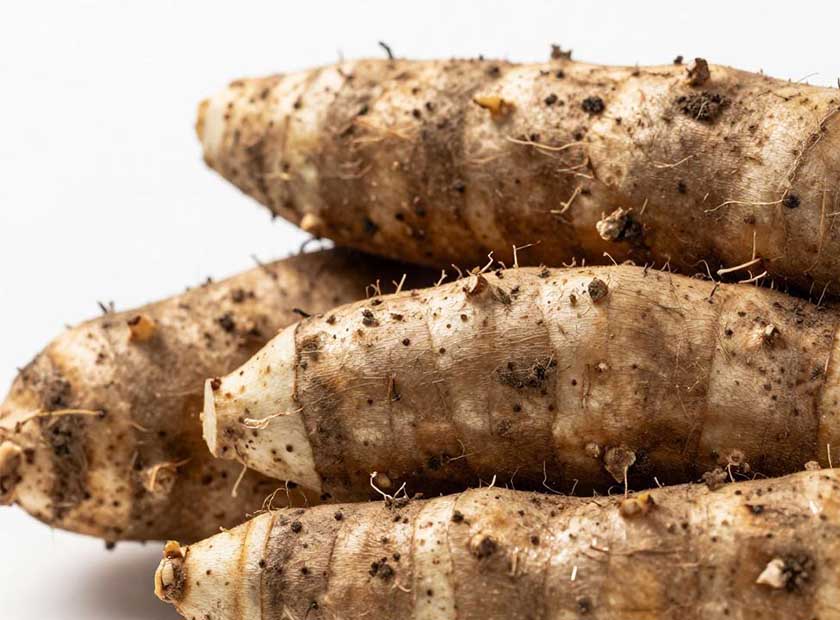
Why Wet Cassava Residue Becomes a Cost Problem
A plant discharging 10 tonnes per hour of pulp at 85% moisture handles about 1.5 tonnes of dry solids and 8.5 tonnes of water. Every truck and dryer is sized for the water. Press the same pulp to 55% moisture and those solids leave in roughly 3.3 tonnes of cake — a third of the original weight.
The material also changes fast. In tropical conditions, wet pulp starts to ferment within a day, pH falls, and leachate follows. That short window forces daily removal and makes any transport interruption expensive. A drier, denser cake ferments more slowly and can be stored long enough to sell.
Material Traits That Shape the Machine Design
- High free water. At 80–85% moisture the pulp drains quickly at the inlet, then slows as the fiber compacts.
- Fine fiber and residual starch. Fines follow the liquid and can blind screen slots, while leftover starch makes the pulp slippery.
- Acidic and fermenting. pH drops within a day or two in hot weather, so wetted parts are stainless steel.
- Abrasive grit. Sand and soil from the roots accelerate wear on screw flights and screens.
How a Screw Press Dewaters Cassava Pulp
Wet pulp enters a hopper and is picked up by a rotating screw with progressively tighter pitch. The screw conveys it through a cylindrical wedge-wire basket. As pitch narrows, void volume falls, pressure rises, and free water escapes through the slots. At the discharge end, an adjustable back-pressure cone holds the pulp plug against the screw. Closing the cone lowers cake moisture; opening it raises throughput and leaves the cake wetter.
The press runs continuously at low screw speed, typically 15–30 rpm on the CTYZ range, so power draw stays modest. A variable frequency drive lets operators trim speed to match the upstream line. Screen aperture is the other main setting: the CTYZ range covers 0.25–2.0 mm, and cassava pulp usually starts at 0.5–1.0 mm.
Comparison with Other Dewatering Equipment
Cassava pulp is fibrous and low in settleable solids, so equipment borrowed from other duties often disappoints.
| Method | Cake moisture | Power and consumables | Notes |
|---|---|---|---|
| Screw press | 40–65% | Low power, no polymer | Continuous, handles fiber |
| Belt filter press | Wetter cake | Polymer, wash water | Needs conditioning; uneven drainage |
| Decanter centrifuge | Low moisture | High power, wear parts | Compact but power-hungry |
| Plate-and-frame press | Low moisture | Cloths, labor | Batch; stop-start operation |
What Dewatered Cassava Pulp Is Good For
Pressed cake is not a finished product, but it is a usable feedstock:
- Biogas feedstock. Cake and press liquor can feed a digester; less water means a smaller digester and less heating.
- Ruminant feed. A fibrous energy source; test for residual cyanide and balance with protein before ration use.
- Compost. The cake adds carbon and structure to manure or crop residues.
- Biomass fuel. Further drying and pelletizing turns it into boiler fuel for the plant.
- Starch recovery. Press liquor carries residual starch; settle or screen it and return the solids to the process.
Sizing: Match the Model to Peak Wet Flow
Size on peak wet tonnes per hour, not daily tonnage, or the press will bottleneck the line during the morning flush. Use your measured flow at the extraction outlet, with headroom for seasonal root quality.
| Model | Motor Power | Processing Capacity | Screw Diameter | Weight |
|---|---|---|---|---|
| CTYZ-160 | 3 kW | 0.5–1 m³/h | 160 mm | 380 kg |
| CTYZ-200 | 5.5 kW | 2–5 m³/h | 200 mm | 650 kg |
| CTYZ-300 | 15 kW | 5–10 m³/h | 300 mm | 2,300 kg |
| CTYZ-400 | 30 kW | 10–15 m³/h | 400 mm | 3,500 kg |
| CTYZ-500 | 45 kW | 15–20 m³/h | 500 mm | 4,800 kg |
| CTYZ-600 | 55 kW | 20–30 m³/h | 600 mm | 7,500 kg |
For 5–10 m³/h of wet pulp the CTYZ-300 is the usual starting point; 10–15 m³/h points to the CTYZ-400, and larger plants step up to the CTYZ-500 or CTYZ-600. Confirm with a sample test, since capacity depends on how the pulp is presented.
Operating Notes for Indonesia, Vietnam, and Thailand
- Feed a buffer, not the press directly. A small tank absorbs line flushes and keeps the compression zone evenly loaded.
- Flush starch before every stop. Rinse the basket and screw with warm water at shift change; dried starch binds like glue.
- Start conservative on screens. Begin at 0.5–1.0 mm, check solids in the press liquor, and tighten only if carry-over is high.
- Match steel to water chemistry. 304 is standard; specify 316L where chloride is high or pH stays low.
- Protect the drive and plan spares. Keep the motor ventilated, check belt tension monthly, and hold a spare screen basket.
Motors can be configured for 380 V/50 Hz, 480 V/60 Hz, or other site voltages, with a VFD option. Share your line data and our engineers will recommend the model, screen, and layout.
What moisture is cassava residue before pressing?
Fresh pulp from starch extraction typically runs 80–85% moisture. It drains freely at first, then holds water tightly once the fiber compacts.
What cake moisture can a screw press reach?
Most cassava installations land between 45% and 60%, inside the CTYZ range of 40–65%. The figure depends on feed moisture, fiber condition, screen aperture, and back-pressure.
Which model suits a 10 m³/h cassava line?
The CTYZ-400 (10–15 m³/h) fits that flow with headroom. If the pulp is watery or the line usually runs lower, the CTYZ-300 at 5–10 m³/h may be enough.
Will fine cassava fiber blind the screen?
It can, because residual starch makes fines sticky. A 0.5–1.0 mm aperture, an even feed, and a warm-water flush each shift keep the basket open; a spare basket avoids downtime.
Is 304 or 316L stainless steel needed?
304 covers most cassava pulp and the mild organic acids formed during fermentation. Choose 316L when process water carries chloride or the pulp stays acidic for long periods.
Can dewatered cassava pulp be fed to livestock?
It is used as a fibrous feed ingredient, but cassava can carry cyanogenic compounds. Test the cake, follow local feed rules, and introduce it gradually under a nutritionist’s guidance.
Send us your wet cassava pulp flow and we will size the press.
Contact our engineers on WhatsApp for model selection and a free quote.
Related: Cassava application · Potato peel application · Sweet potato application · CTYZ-300 screw press · How to choose a screw press · Screw press buyers guide