Pig Manure Dewatering with a Screw Press: Sizing, Settings and Returns
Pig slurry is one of the easiest materials for a screw press to handle, and one of the easiest to get wrong: undersize the machine and it floods, set the cone too tight and the screen blinds, dilute too much and the cake never forms. This guide covers what the slurry actually contains, how to size the machine against a real daily volume, which settings matter, and what the separated solids and liquid are worth on a working farm.
What Pig Slurry Actually Contains
Fresh pig slurry arrives at the separator at roughly 3-8% dry matter, and that figure moves with diet, pig age, bedding practice and how much washing water enters the pit. The dry matter is a mixture of undigested fibre, feed fines, hair and skin cells, plus grit and sand from floors. Fibre is what makes a screw press work: it forms the mat that lets water drain while solids are pushed toward the cone. Very dilute slurry, or slurry from liquid-feeding systems with little fibre, needs more care in setting up.
Why Dewater Before Storage, Transport or Spreading
Handling slurry wet is expensive in three ways. Volume: every cubic metre that goes into a lagoon or a tanker is mostly water. Crust and sediment: lagoons stratify, pumps block and agitation becomes a job in itself. Transport and application: spreading wet slurry means moving water across the farm and losing nitrogen to runoff. Separating at the source cuts the volume that has to be stored or moved and turns part of the stream into a stackable product.
How a Screw Press Handles Pig Slurry
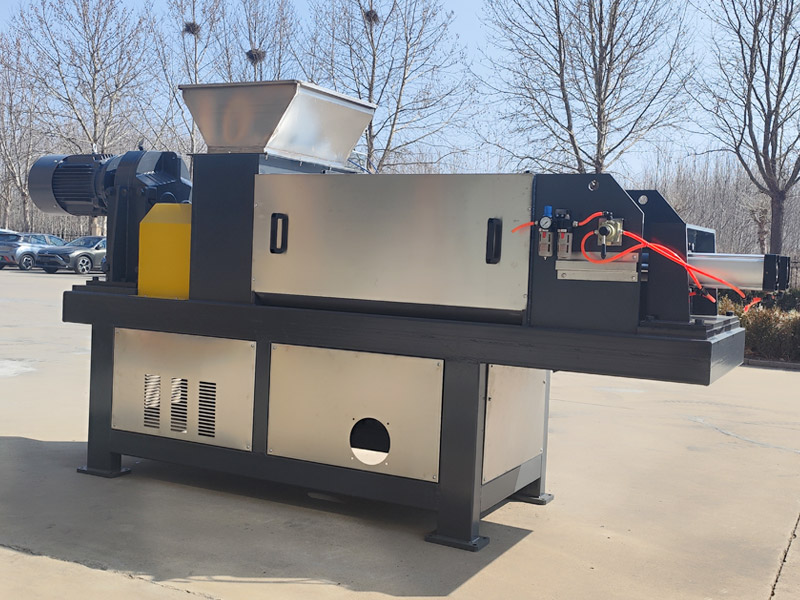
Slurry enters the screen cylinder, where a slow-turning screw conveys it forward. Water drains through the screen under the head of material, and the solids compact against a cone at the discharge end. Because the screw turns at low speed, the fibre structure is not destroyed: the cake keeps enough structure to stack, and the liquid leaves with far fewer coarse solids than it arrived with. Typical results on pig slurry are a cake at 55-65% moisture and a liquid fraction that flows freely to the lagoon or the irrigation line.
Sizing: From a Few Hundred to Ten Thousand Pigs
Size against the daily volume, then choose a machine that handles it in a working shift rather than around the clock. Reference capacities for our CTYZ range on manure-type slurry: CTYZ-160 0.5-1 m3/h, CTYZ-200 2-5 m3/h, CTYZ-300 5-10 m3/h, CTYZ-400 10-15 m3/h, CTYZ-500 15-20 m3/h, CTYZ-600 20-30 m3/h. A farm producing 40 m3 a day and running the separator for six hours needs about 7 m3/h, which points to the CTYZ-300 rather than the smaller machine run flat out.
Settings That Decide the Result
Screen aperture
0.5-1 mm slots suit pig slurry: fine enough to retain fibre, open enough to drain. A screen that is too fine blinds quickly and forces dilute slurry through the gaps; too coarse and the cake turns sloppy.
Cone pressure
Back pressure sets cake dryness. Start light, watch the cake leave the discharge, and increase until it stacks without crumbling. Over-tightening is the most common mistake: throughput drops, the screen loads up and wear accelerates.
Feed consistency
Steady feed beats batch dumping. A sump with a mild agitator and a controlled pump gives the screw a consistent material to work with, which is what produces consistent cake.
Screw speed
Where a VFD is fitted, slower speed suits wet, slippery slurry and faster speed suits fibrous material. The adjustment costs nothing and is usually the fastest way to fix a changing material.
Where the Separated Solids Go
- Composting: mixed with straw or dry litter and turned, the solids compost in weeks and make a saleable soil amendment.
- Bedding: after further drying, solids are used as bedding in deep-litter or dairy systems.
- Biogas: solids can be fed to a digester at higher dry matter than raw slurry, improving gas yield per cubic metre of reactor.
- Direct land application: stackable solids are easier to store and to spread at the right rate than liquid slurry.
Maintenance on a Working Farm
A screw press on manure is a low-maintenance machine if the daily routine is kept: flush the screen at the end of each shift, check the cone and discharge for build-up weekly, grease the bearings on schedule, and keep one spare screen on the shelf. Screens are consumables and the wear rate depends on grit content, so the farm that removes sand from the pit gets far longer screen life.
What the Returns Look Like
Separation pays back through three channels rather than one: reduced storage and transport volume, bedding or compost value from the solids, and easier, more even application of the liquid fraction. On a farm that currently tankers slurry to distant fields, the transport saving alone often covers the machine within a couple of seasons; where bedding is bought in, the substitution adds to that.
Five Mistakes to Avoid
- Sizing on pig count instead of a measured daily volume.
- Running the cone too tight to chase a drier cake and losing throughput.
- Feeding heavily diluted slurry and expecting a firm cake.
- Ignoring sand and grit, then blaming the screen for short life.
- Buying without a test on the farm’s own slurry, which is the only reliable way to confirm capacity and cake quality.
Related reading: farm-scale selection is covered in screw press manure separator for dairy farms, the comparison across livestock types in screw press separators in agriculture, and the dedicated machine in our manure dewatering machine page.
Frequently Asked Questions
Q: Does pig manure need a flocculant for screw press separation?
A: Usually not. Pig slurry carries enough fibrous matter for a screw press to build a cake without polymer, provided the screen aperture and cone pressure match the material. Polymer dosing earns its place when the slurry is very dilute from washing water, or when the farm needs a clearer liquid fraction; it adds running cost and a mixing step, so it is a decision to make on measured results rather than by default.
Q: How many pigs can one screw press handle?
A: Work from the daily slurry volume, not the head count: a finishing operation typically produces 5-10 litres of slurry per pig place per day once washing water is included. A CTYZ-300 at 5-10 m3/h, run for six hours, covers roughly 30-60 m3 a day, which suits several thousand finishing places. Measure the pit volume over 24 hours before choosing.
Q: What moisture is the separated pig manure solids?
A: Typically 55-65% moisture, depending on the fibre content of the diet and the cone setting. At that level the solids stack, can be turned for composting and can be used as bedding after further drying. Pushing the cone harder gives drier cake but reduces throughput and increases screen wear.
Q: Is the liquid fraction still usable as fertiliser?
A: Yes. The liquid leaving the press carries most of the nitrogen and potassium and a smaller share of the phosphorus, so it remains a valuable fertigation stream. Separation makes it easier to pump, store and apply evenly, and reduces the crust and sediment problems in lagoons and drip lines.
Need a price for your material and tonnage?
Send your material type, daily volume and destination port through the contact form, or browse the CTYZ screw press range from 160 to 600 mm screw diameter for capacities and motor ratings.