Biogas Slurry Solid-Liquid Separation: A Practical Screw Press Guide
A digester turns organic waste into gas and leaves a slurry that is roughly 95% water. Separating that slurry into a stackable fibre fraction and a pumpable liquid fraction is what makes the whole plant manageable: storage shrinks, fertiliser handling improves, and the fibre becomes a product instead of a disposal problem. This guide covers what digestate contains, how a screw press compares with a decanter centrifuge, and how to size and run the machine.
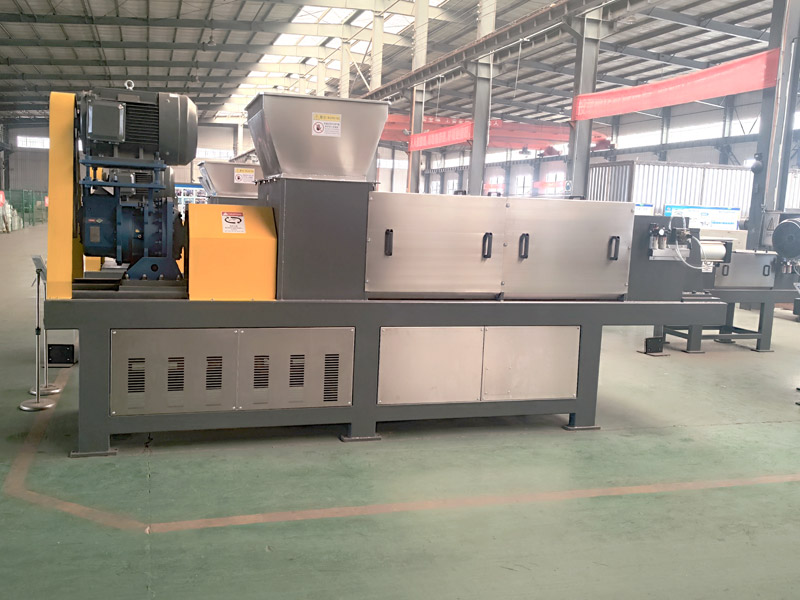
What Comes Out of the Digester
Digestate leaves the reactor at 4-8% dry matter, most of it water, with the remaining solids made up of partly digested fibre, undigested seeds and husks, microbial biomass and mineral particles. It is biologically active, corrosive to mild steel, and rich in ammonium nitrogen, phosphorus and potassium. How that material is handled after the digester decides whether the plant runs smoothly or fights its own slurry every day.
Why Separate Digestate at All
- Storage: separated fractions take less tank and lagoon volume and stratify less.
- Transport: fibre can be moved by loader or truck instead of tanker, which changes the economics of off-farm use.
- Fertiliser quality: the liquid fraction can be applied through irrigation or injection equipment with far less blocking.
- Revenue: fibre is saleable as compost, soil amendment or bedding, and it can be returned to the digester only when it makes sense.
- Process control: removing fibre upstream of a second-stage reactor or a lagoon reduces crust formation and mixing load.
Screw Press or Decanter Centrifuge?
The two machines separate by different means. A decanter uses high-speed rotation and centrifugal force to reach a high solids capture and a clear centrate; it needs 8-15 kWh per cubic metre, skilled maintenance and a significant capital outlay. A screw press uses gravity drainage plus mechanical compression at low speed: 3-5 kWh per cubic metre, a simple screen and cone, and routine maintenance a farm technician can handle. Capture is lower, so more fine solids stay in the liquid, but for digestate going to land or to a lagoon that is usually acceptable.
Where a plant must meet a strict discharge standard, the practical arrangement is a screw press first, decanter second: the screw press removes the bulk of the fibre cheaply, and the decanter polishes a much smaller stream.
The Fibre Fraction: Compost, Bedding, Soil Amendment
Screw press fibre from digestate leaves at roughly 30-40% dry matter. Composted in windrows with a bulking agent it becomes a stable soil amendment; dried further it can be used as livestock bedding; in some regions it is pelletised or sold to landscapers. Because much of the labile carbon has already been converted in the digester, digestate fibre composts differently from raw manure fibre: it heats less and stabilises faster, which suits covered or space-limited composting.
The Liquid Fraction: Fertigation and Storage
The liquid fraction carries most of the available nitrogen and potassium. Once the coarse fibre is out, it pumps without blocking, stores with less crust, and can be applied through drip, pivot or injection. In regions with nitrogen limits, separation also helps match application rates to crop demand, since the liquid fraction is more predictable than raw slurry.
Sizing on Real Daily Volume
Size the separator on cubic metres per day and on the hours you are willing to run it, not on digester volume. A 500 kW plant on manure and energy crops might produce 60-100 m3 a day; running eight hours means 8-12 m3/h, which is the CTYZ-400 class. Reference capacities: CTYZ-200 2-5 m3/h, CTYZ-300 5-10 m3/h, CTYZ-400 10-15 m3/h, CTYZ-500 15-20 m3/h, CTYZ-600 20-30 m3/h. Fibrous feedstocks run near the top of each band, thin food-waste digestate near the bottom.
Operating Notes
- Screen: 0.75-1 mm suits digestate; check for blinding at the end of each shift.
- Grit: sand and stones wear the screw flight and screen, so a grit trap upstream pays for itself.
- Corrosion: hydrogen sulphide and ammonium attack mild steel; 304 stainless is the practical minimum, 316L where chlorides are high.
- Cone: adjust to the feedstock, not once and forget. A change of diet changes the cake.
- Dilution: very thick digestate can be diluted slightly to improve drainage, at the cost of more liquid to handle.
What Payback Looks Like
A separator changes the plant’s cost structure rather than adding a revenue line on its own: fewer tanker movements, less storage capacity needed, fibre that can be sold or used as bedding, and a liquid stream that can be applied precisely. On a mid-size plant these effects usually repay the machine within two to four years, faster where bedding or compost has a local market.
Related reading: the machine itself is described in what is a screw press; manure-side separation is covered in screw press separators in agriculture; and general selection criteria in how to choose a screw press dewatering machine.
Frequently Asked Questions
Q: Can a screw press separate biogas slurry?
A: Yes, and it is the most common separator on farm-scale and mid-size digesters. Capture of total solids is typically 50-70%, which is lower than a decanter but achieved with a fraction of the power, a much lower purchase price and far simpler maintenance. Where the objective is stackable fibre and a cleaner liquid, the screw press is usually the right tool.
Q: Screw press or decanter centrifuge for digestate?
A: A decanter reaches higher solids capture and a clearer liquid, at roughly three to five times the power draw per cubic metre, a much higher capital cost and specialist maintenance. A screw press is cheaper to buy and run, tolerates fibre and grit well, and produces a cake that composts readily. Many plants use a screw press as the primary separator and add a decanter only where discharge rules demand a very clear liquid.
Q: What dry matter does the fibre fraction reach?
A: Typically 30-40% dry matter from a screw press on digestate, depending on the feedstock and the cone setting. That is dry enough to stack, compost and transport, though a period of windrow composting or further drying is usual before sale or use as bedding.
Q: Does digestate separation need polymer?
A: Not for a screw press in most cases: digestate fibre forms a mat on the screen without help. Polymer is used where the liquid fraction must be very clear, or where the feedstock is mostly food waste with little structural fibre. Every kilogram of polymer is a running cost, so test before committing to a dosing system.
Need a price for your material and tonnage?
Send your material type, daily volume and destination port through the contact form, or browse the CTYZ screw press range from 160 to 600 mm screw diameter for capacities and motor ratings.