Compact Double Shaft Shredder: Choosing and Integrating a Small Twin-Shaft Machine
Not every yard needs a 40-tonne-per-hour plant. A compact double shaft shredder brings the same two-shaft shearing action to small scrap yards, plastics workshops and factories that want to shred their own waste — and unlike large plant equipment, it can usually be installed and running within days. This guide covers what compact machines handle, how long installation really takes, and how to integrate one into a line that is already running.
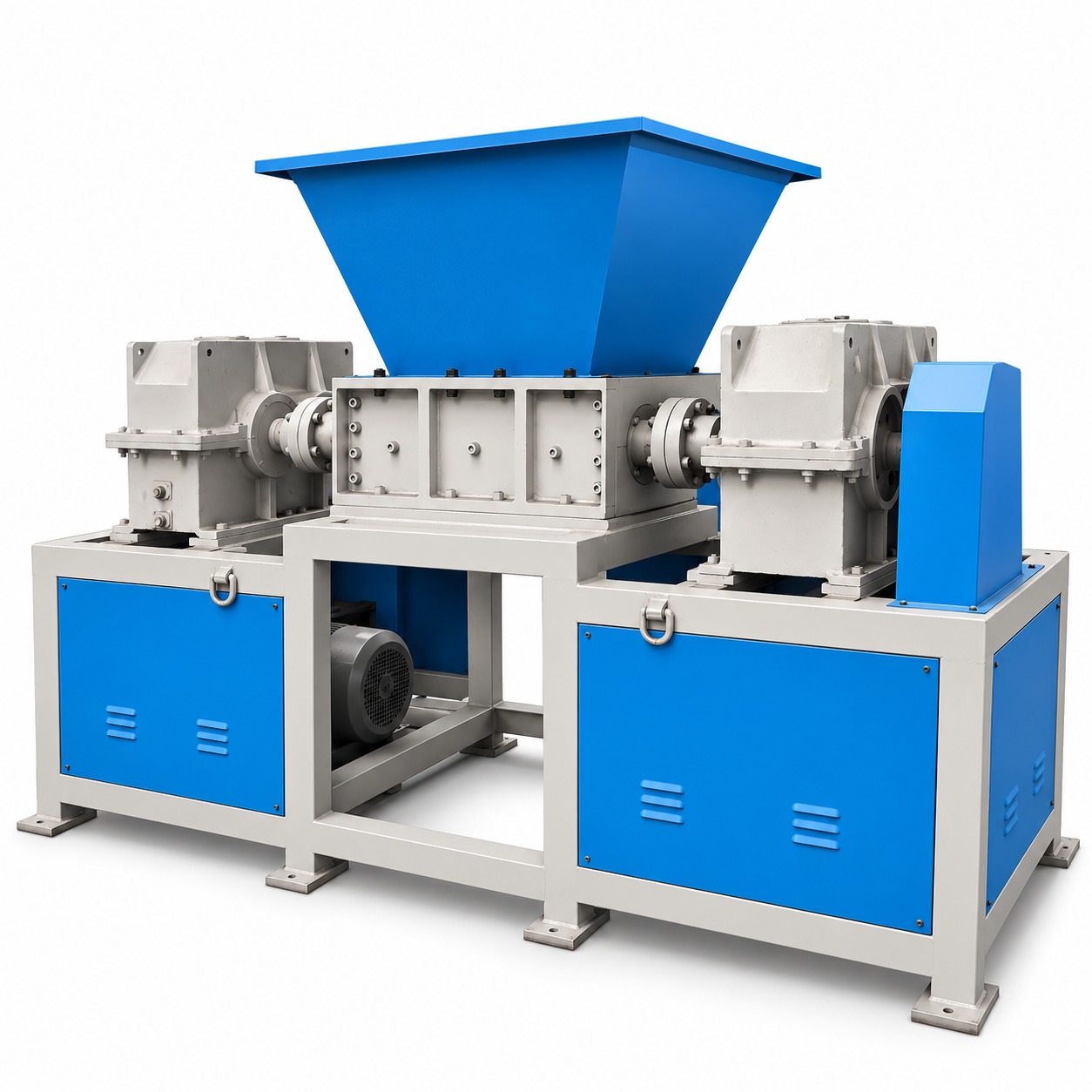
What Makes a Shredder “Compact”
Compact in this context means chamber and motor class, not capability. Our CTSS-330 and CTSS-800 keep the full twin-shaft principle — two low-speed, high-torque shafts with multi-claw blades — in a footprint that fits through a standard workshop door. What changes is throughput: roughly 0.5–1 t/h for the 330 and 1–4 t/h for the 800, depending on material.
Which Scrap Types Suit a Compact Machine
A compact double shaft shredder is especially suited to scrap that is bulky but not massive: plastic lumps, purgings and pipes, 200-litre drums, small IBCs, wood pallets and furniture, paper and cardboard rolls, light cables and cable trays, small appliance housings, and commercial or kitchen waste. It shares the big machines’ tolerance for mixed feed — a true advantage over granulators and single-rotor cutters, which need pre-sorted, pre-cleaned input.
Installation: What to Expect, Day by Day
Day one: position and level the machine, anchor bolts. Day two: electrical connection and rotation check. Day three: fit hopper extension and discharge conveyor, first no-load run. Days four to seven: test shred with your material, adjust blade gap if needed, operator training. The electricity supply is usually the critical path, not the machine: confirm cable cross-section and starter capacity before the delivery truck arrives.
Integrating into an Existing Plant
Because a twin-shaft machine accepts uneven, unsorted feed, integration is mostly a matter of heights and flows. Three proven layouts: (1) shredder under an existing sorting cabin, taking rejects directly; (2) shredder fed by a belt from a tipping station, discharging into a container or baler; (3) shredder in front of a granulator, pre-reducing bulky items the granulator cannot swallow. In each case the key numbers are feed height, discharge height and the ton-per-hour balance between machines.
Budget: Purchase, Installation, Running
Beyond the machine price, budget for a discharge conveyor, electrical work and an optional dust skirt or extraction hood. Running costs for compact machines are proportionally similar to their larger siblings — see our full breakdown of shredder operating cost per ton. For price drivers on the purchase side, read double shaft shredder price factors.
Full specifications of all sizes, from the compact CTSS-330 to the CTSS-2000, are on the double shaft shredder product page.
Frequently Asked Questions
Q: What scrap is a compact double shaft shredder especially suited for?
A: Small twin-shaft machines (330–800 mm chamber class) handle plastic lumps and pipes, drums and small IBCs, wood pallets, paper rolls, light cables, e-waste housings and kitchen or commercial waste — up to roughly 1–4 t/h depending on material. For whole truck tires or heavy long steel, step up to the 1000 mm+ class.
Q: How long does it take to install an industrial double shaft shredder?
A: A compact machine typically installs in 2–7 working days: level the floor or cast a simple foundation, connect the power supply, fit the feed hopper and discharge conveyor, run a test shred and train the operator. Larger machines with full conveyors and dust systems take 2–4 weeks.
Q: Can a double shaft shredder be integrated into an existing plant?
A: Yes, and this is one of its strengths. Because it accepts uneven feed directly, it can sit between an existing sorting line and a baler, granulator or container loading station. Integration mainly means matching feed height, discharge conveyor speed and extraction of oversize.
Q: What power supply does a compact shredder need?
A: Most compact twin-shaft machines run on a standard industrial three-phase supply (380–480 V). A CTSS-330 or CTSS-800 draws well within what a typical workshop substation provides; confirm total starting current with the supplier when several motors share one feed.
Want a cost estimate for your own material?
Browse the CTSS double shaft shredder range, see all machines on Products, or contact us with your daily tonnage for a per-ton operating calculation and a free quote.