Cow Dung and Manure Dewatering: A Complete Screw Press Separator Guide
Fresh cow dung and dairy manure leave the barn at roughly 80–85% moisture. Most of what a farm stores, pumps and hauls is water. A cow dung dewatering machine splits that stream into fibre-rich solids and a liquid fraction, so the solids can be stacked, composted or used as bedding while the liquid goes to a digester or a slurry management system for dairy farming. This guide covers how a manure screw press works, how it compares with other manure separators, and how to size one for a small herd or a large dairy.
Why Manure Dewatering Changes Farm Economics
The gain is not only a drier product. It is the volume you stop moving. Press manure from 85% to 40% moisture and ten tonnes of raw material becomes roughly three tonnes of cake. That cuts hauling trips, storage space and the load on downstream drying or composting.
- Lower transport and storage cost: less water in every tonne of manure solids.
- More useful by-products: separated fibre works as compost bulking agent, bedding fibre or feedstock for a biogas plant.
- Easier handling: a manure solids separator produces a stackable cake instead of a free-flowing slurry.
- Better nutrient control: the liquid fraction carries most of the soluble nutrients and can be applied through irrigation or sent to digestion.
How a Manure Screw Press Separates Cow Dung
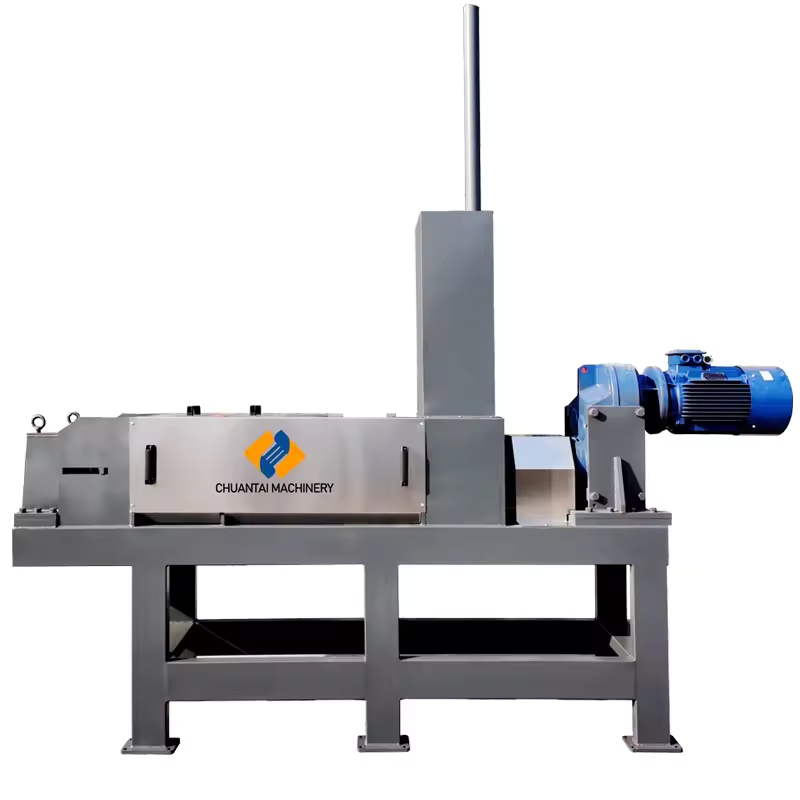
A screw press, also called a manure screw separator or manure press, is a continuous device. Manure is fed into a screening chamber where a rotating screw with a progressively tighter pitch pushes the material forward. The narrowing pitch and an adjustable back-pressure plate compress the fibre against a wedge-wire screen. Water and fine particles pass through the slots; the retained fibre exits as cake at the discharge end.
- Feed: pump or convey screened manure into the inlet at a steady rate.
- Convey and compress: the variable-pitch screw increases pressure along the screen barrel.
- Drain: the wedge-wire screen separates the liquid fraction from the fibre.
- Discharge: a back-pressure cone sets the final cake dryness, typically 30–45% moisture for cow manure, depending on the material and operating conditions.
No thermal drying is involved. That is why a screw press is often described as a mechanical cow dung press machine rather than a cow dung dryer machine: it removes free water, not bound moisture. If you need a very dry pellet, add a dryer after the press.
Cow Dung Dewatering Machine vs Other Manure Separators
Screw presses are common on farms because they run continuously and have few moving parts. Other technologies solve the same problem in different ways. The right choice depends on fibre content, throughput, sand and your budget.
| Separator type | How it separates | Typical dry matter of cake | Points to check |
|---|---|---|---|
| Screw press | Screen barrel plus variable-pitch screw | 55–70% (30–45% moisture) | Continuous operation, moderate energy, screen and screw wear |
| Decanter centrifuge | High-speed centrifugal force | Higher dry matter on fine solids | Higher capital and power cost, skilled maintenance |
| Belt filter press | Filter belts with roller pressure | Similar range to screw press | Wash water use, belt tracking and replacement |
| Gravity screen or settling | Static slope or vibrating screen | Lower dry matter | Lowest cost, larger footprint, wetter cake |
For a farm that wants one robust machine and modest operating cost, a screw press is usually the starting point. If the goal is maximum dryness on fine manure solids, a centrifuge may be justified despite the higher cost.
Choosing a Manure Separator for Dairy Farms and Larger Herds
An advanced manure separator for large farms is not simply a bigger version of a small one. Check the whole stream before you select a model.
- Flow per hour: size on peak flow, not daily average, and allow for future herd growth.
- Dry matter and fibre: long fibre presses well; fine or highly digested material may need a finer screen.
- Sand and grit: bedding sand is abrasive and needs a desanding step upstream.
- Intended outlet: bedding, compost, biogas feed and direct land application set different dryness targets.
- Site layout: check inlet height, discharge clearance, drainage and wash-down access.
- Power and water: confirm the supply at the installation point and the volume of wash water available.
Sand-Laden Manure Separation: Check It Before You Buy
Sand-laden manure separation is a special case. Dairy herds using sand bedding carry grit into the collection system, and grit wears screws and screens far faster than fibre does. Install a desanding or settling step ahead of the press, choose wear-resistant screen and screw material, and inspect the discharge cone on a fixed schedule. A press that handles clean cow dung well can still struggle if the incoming sand load is not controlled.
CTYZ Screw Press Sizing for Manure
The CTYZ series covers farm flows from a small milking parlour to a large dairy. Capacities below are for the machine; the right model depends on the solids load and the dryness you need.
| Model | Motor power | Capacity | Screw diameter | Weight |
|---|---|---|---|---|
| CTYZ-160 | 3 kW | 0.5–1 m³/h | 160 mm | 380 kg |
| CTYZ-200 | 5.5 kW | 2–5 m³/h | 200 mm | 650 kg |
| CTYZ-300 | 15 kW | 5–10 m³/h | 300 mm | 2300 kg |
| CTYZ-400 | 30 kW | 10–15 m³/h | 400 mm | 3500 kg |
| CTYZ-500 | 45 kW | 15–20 m³/h | 500 mm | 4800 kg |
| CTYZ-600 | 55 kW | 20–30 m³/h | 600 mm | 7500 kg |
What to Do With the Separated Solids
- Compost: fibre cake supplies structure and absorbs nitrogen-rich liquid.
- Bedding: dried, screened fibre can be reused as a bedding component where hygiene rules allow.
- Biogas: a digester feed with a higher solids content is easier to manage than raw manure slurry.
- Fertiliser: cake is easier to spread and store than raw manure, with less odour and runoff risk.
- Transport: drier solids cost less per tonne of dry matter to move off-farm.
Running and Maintaining a Manure Press
- Feed evenly. Slugs of manure cause surge loading and uneven cake.
- Adjust the back pressure gradually and record the result at each setting.
- Flush the screen after each run, especially when sand is present.
- Check screw and screen wear monthly; replace parts before throughput drops.
- Drain and protect the machine if it will stand idle in freezing weather.
Stable feeding matters more than any single setting. A press fed at a steady rate produces a consistent cake and a clearer liquid fraction, which makes every downstream step easier.
FAQ: Cow Dung and Manure Dewatering Questions
What technologies are used for manure dewatering in dairy farms?
Most dairy farms use a screw press separator, a decanter centrifuge, a belt press or a gravity screen. The screw press is the common choice for cow dung because it runs continuously, handles long fibre and needs modest maintenance.
How dry does a cow dung dewatering machine make the solids?
A properly set manure screw press typically delivers cake at about 30–45% moisture, which is 55–70% dry matter. Results vary with fibre content, feed rate and screen selection.
Is a manure separator the same as a manure dryer?
No. A separator removes free water mechanically; a dryer uses heat to remove bound moisture. If the target is a dry pellet, use a screw press first and a dryer afterwards.
Can a screw press handle sand-laden manure?
It can, provided the sand load is controlled. For sand laden manure separation, add desanding upstream, use wear-resistant parts and inspect the screen and cone regularly. Uncontrolled grit shortens component life.
Which separator suits a large dairy farm?
Size on peak hourly flow, dry matter and the downstream use of the solids. Large farms often choose a higher-capacity CTYZ model, or two presses in parallel, so one can stay in service during maintenance.
Does a dairy manure separator reduce odour?
It helps. Separating solids reduces the material that ferments in storage and produces a stackable cake with less free liquid. It does not replace good manure management or regular removal.
Can manure solids go into a biogas plant?
Yes. Pressed manure fibre is a common digester feed. The higher solids content makes pumping and dosing easier than with raw manure slurry.
What maintenance does a manure screw press need?
Keep feed steady, flush the screen after operation, check the back-pressure setting and inspect wear parts monthly. Most farms can do this with existing maintenance staff.
Whether you are comparing a cow dung dewatering machine with a centrifuge or sizing a manure screw press for a new barn, start with a sample of your manure. Fibre, sand and flow decide the design far more than the headline capacity. Send us those numbers and we will help you choose a separator that fits the job.
Tell us your manure flow, dry matter and sand content, and we will suggest a separator size.
Contact our engineers on WhatsApp for model selection and a free quote.
Related: Cow dung dewatering machine · Cow manure application · Cow dung processor guide · Dairy manure separator guide · How a manure screw press works · CTYZ-300 screw press