Screw Press Dewatering for Paper Pulp: Consistency, Capacity and Fiber Recovery
In a paper mill, water is the product you pay for twice: once to move the fibre, and again to remove it. A pulp stream at 3% consistency contains about 32 tonnes of water for every tonne of fibre. Thickening that stream to 30% cuts the accompanying water to 2.3 tonnes — a reduction of more than 90% in the mass that has to be pumped, stored, transported or evaporated.
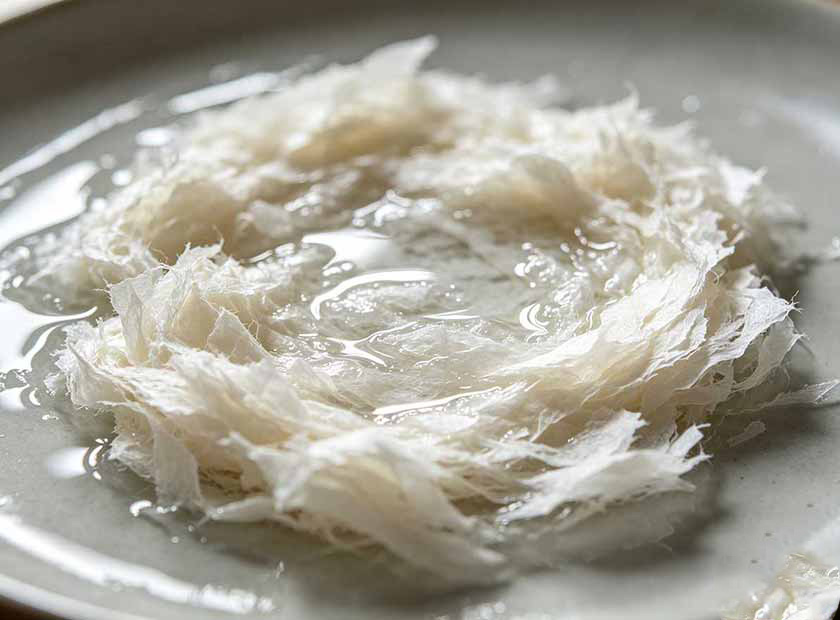
A screw press does that thickening mechanically, continuously and in a footprint that fits inside an existing stock preparation area. It is not a new idea in pulp mills, but it is often specified badly, because buyers compare machines on throughput alone when the results actually depend on consistency, fibre type and screen choice. This guide works through those three variables, gives capacity figures by pulp type, and explains what happens to the fibre inside the machine.
Why pulp mills dewater before anything else
Pulp arrives from pulping, screening or washing as a dilute suspension. Before refining, blending, storage or sheet forming, the consistency has to be raised to a workable level. Until that happens, every downstream step is handling water rather than fibre: tanks are oversized, agitators are overloaded, and transport between sites moves a slurry that is 95% water.
The economics are easiest to see in transport and drying. A mill moving pulp between buildings or to an off-site converting plant pays per tonne of wet material, and only a third of that tonnage may be fibre. In drying, every kilogram of water that enters the dryer has to be evaporated, and evaporation is the most energy-intensive step in the mill. Mechanical dewatering removes free water at a small fraction of the energy cost of thermal drying, so the more water that can be removed mechanically, the better the energy balance of the whole line.
Consistency, in plain terms
Consistency is the percentage of oven-dry fibre in a pulp suspension. Mills use it as the common language between pulping, stock preparation and the paper machine, and the ranges are fairly standard:
| Range | Consistency | Typical equipment | Handling characteristics |
|---|---|---|---|
| Low consistency | Below 3.5% | Centrifugal pumps, screens, cleaners | Pumpable, but large volumes and high transport cost |
| Medium consistency | 8–15% | MC pumps, disc thickeners, medium-consistency towers | Pumpable with specialised equipment; storage becomes practical |
| High consistency | Above 20% | Screw presses, twin-wire presses, high-consistency refiners | Stackable or conveyable; minimal free water |
A screw press sits at the boundary between medium and high consistency. It takes a feed that is usually between 2% and 8% and delivers a discharge that is typically 25–40%, depending on the pulp. That is enough to make the material conveyable, storable without settling, and economic to transport.
What consistency actually costs
The table below converts consistency into the number that matters for logistics and drying: how much water travels with each tonne of dry fibre.
| Consistency | Water per tonne of dry fibre | Water per 100 t/day of dry pulp | Practical meaning |
|---|---|---|---|
| 2% | 49.0 t | 4,900 t/day | Essentially a dilute slurry; pumping dominates |
| 3% | 32.3 t | 3,233 t/day | Typical washed pulp from a decker |
| 5% | 19.0 t | 1,900 t/day | Typical stock preparation feed |
| 10% | 9.0 t | 900 t/day | Medium consistency; storage becomes viable |
| 20% | 4.0 t | 400 t/day | High consistency; conveyable |
| 30% | 2.33 t | 233 t/day | Screw press discharge on most pulps |
| 35% | 1.86 t | 186 t/day | Upper end for well-drained virgin fibre |
The jump from 3% to 30% does not reduce the water by a factor of ten; it reduces it by a factor of fourteen, because the relationship is hyperbolic. This is why the first thickening stage delivers the largest saving, and why a screw press placed immediately after washing or screening usually pays for itself faster than any other dewatering investment in the mill.
How a screw press thickens pulp
Pulp enters a hopper and falls into a cylindrical wedge-wire screen basket. A screw with a variable pitch rotates slowly inside the basket, conveying the fibre forward. Three things happen in sequence:
- Gravity drainage. In the first section, free water falls through the screen under its own weight. This removes the bulk of the water before any pressure is applied, which is why open screen area in the inlet section matters more than compression force.
- Compression. As the screw pitch narrows, the fibre mat is compressed against the screen. Water is forced out through the wedge wire, and the mat forms a moving plug that itself acts as a filter.
- Shear and discharge. The plug is pushed against a discharge restriction — a cone, a spring-loaded plate or a pneumatic restrictor — which sets the final dryness. The continuous plug seals the discharge, so the machine behaves like a pressure vessel without needing one.
This is mechanically different from a disc thickener or a gravity decker, which rely on gravity settling and a wire mesh to drain free water. Those machines stop at 8–12% consistency because gravity alone cannot remove water held inside the fibre mat. A screw press can go further because it applies pressure to that mat.
Where a screw press fits in a pulp line
| Position in the line | Typical feed consistency | Discharge consistency | Purpose |
|---|---|---|---|
| After pulping and washing | 3–5% | 25–35% | Reduce transport and storage volume before stock preparation |
| Ahead of refining | 4–6% | 25–32% | Stable feed consistency for high-consistency refining |
| Recycled fibre line (OCC, ONP, MOW) | 3–6% | 25–38% | Thicken screened stock; reduce warehouse volume |
| Molded pulp / fibre products | 2–5% | 28–38% | Concentrate stock before forming; recover fibre from trim |
| Rejects and tailings | 2–6% | 25–45% | Dewater screenings and light rejects for handling and recovery |
| Market pulp preparation | 4–8% | 30–40% | Raise consistency ahead of drying or baling |
The most common retrofit is after the washing stage on a recycled fibre line. Mills with an existing disc thickener often add a screw press downstream of it rather than replacing it, because the disc thickener handles the large volume cheaply and the screw press takes the thickened stock to a consistency that can go straight into storage.
What happens to the fibre inside the machine
Pulp is not a generic solid. Its value depends on fibre length, freeness and fines content, and a dewatering device that damages any of those can cost more than it saves. A screw press is comparatively gentle, for three reasons:
- Low rotational speed. The screw turns at a few revolutions per minute, so the shear applied to the fibre is far lower than in a centrifugal pump or a high-speed refiner. Fibre length and freeness are largely preserved across the machine.
- No vacuum or high-pressure zone. Unlike a vacuum filter or a high-pressure press, the screw compresses the mat progressively, which avoids the sudden compaction that collapses the fibre structure and produces fines.
- Controlled residence time. The pulp spends a predictable 30–120 seconds in the basket, and the discharge restriction can be adjusted to suit a change in furnish without changing the screen.
The one unavoidable loss is fines. Particles smaller than the screen aperture pass into the filtrate, and on a 0.5 mm screen that includes most of the fines fraction and some filler. This is not a defect; it is the mechanism by which the machine dewaters. The filtrate is therefore not waste water — it is a dilute fibre stream that should be returned to the white water system or to the head of the process rather than sent to drain.
| Pulp type | Fiber characteristics | What to expect in a screw press |
|---|---|---|
| OCC (old corrugated containers) | Short, stiff, well-drained | Fast drainage, 30–38% discharge, low fines |
| ONP / MOW (news, mixed office) | Mixed length, high filler | Good drainage, 28–35%, watch filler in filtrate |
| Virgin chemical pulp (kraft) | Long, strong, flexible | Excellent cake formation, 30–40% |
| Mechanical pulp (TMP, groundwood) | High fines, low strength | Slower drainage, 22–30%, finer screen needed |
| Bamboo pulp | Long, stiff, high silica in some grades | Good drainage, 28–36%; watch screen wear |
| Bagasse pulp | Pith content, variable length | Depithing first; 25–33% with a moderate screen |
| Dissolving pulp | Very pure, short cut | High value; minimise fines loss with a finer screen |
Mechanical pulps are the difficult case. The high fines content blinds the screen more quickly, drainage is slower, and the achievable discharge consistency is lower. If a mill runs a mixed furnish of kraft and mechanical pulp, the machine should be sized on the mechanical fraction and the screen chosen for the fines content, not for the average.
Matching the screen and the discharge restriction
Two adjustments determine the result on a given pulp: the screen aperture and the back pressure at the discharge.
A 0.5 mm wedge-wire screen is the usual starting point for pulp. It retains long fibre while allowing fines and filler to pass, and it produces a discharge consistency in the high twenties to mid thirties on most furnishes. Going finer — 0.3 mm — improves fibre retention and filtrate clarity but reduces capacity sharply and increases blinding risk on mechanical pulp. Going coarser — 0.75 to 1.0 mm — raises capacity and suits OCC, at the cost of more fibre in the filtrate.
Back pressure controls the final dryness. Increasing it produces a drier cake and a stronger plug, up to the point where the motor torque becomes the limit or the mat becomes impermeable and water can no longer escape. On pulp, the useful range is usually narrower than on agricultural fibre: beyond a certain pressure the extra energy produces heat and compaction rather than water removal. Set the restriction with the filtrate flow in view, not just the discharge consistency.
Capacity: think in tonnes of dry pulp, not cubic metres
Suppliers quote volumetric throughput because that is how the inlet and screw are sized. Mills budget in tonnes of pulp, usually air-dry or oven-dry per day. The conversion needs the feed consistency, because the same machine handles very different tonnages at 3% and at 6%.
| Model | Pulp flow (m³/h) | Dry pulp at 4% feed (t/day) | Dry pulp at 6% feed (t/day) |
|---|---|---|---|
| CTYZ-160 | 0.5–1 | 0.5–1.0 | 0.7–1.4 |
| CTYZ-200 | 2–5 | 1.9–4.8 | 2.9–7.2 |
| CTYZ-300 | 5–10 | 4.8–9.6 | 7.2–14.4 |
| CTYZ-400 | 10–15 | 9.6–14.4 | 14.4–21.6 |
| CTYZ-500 | 15–20 | 14.4–19.2 | 21.6–28.8 |
| CTYZ-600 | 20–30 | 19.2–28.8 | 28.8–43.2 |
Two corrections are worth applying. First, pulp density is not exactly 1.0; at 4% consistency it is close enough for planning, but at higher consistency the mat density and the volumetric efficiency of the screw reduce the effective throughput. Second, the figures assume a well-drained furnish. On mechanical pulp or high-fines stock, derate by 20–30%.
Filtrate, white water and fiber recovery
The filtrate leaving a pulp screw press typically contains 0.2–1.0% suspended solids, mostly fines and filler. That stream has value and it has a destination:
- Return to the white water system. The simplest option, and the one that keeps the mill water balance closed. The fines are recovered downstream by a save-all or a disc filter.
- Return to the head of the line. Where the filtrate is dilute and the process can tolerate the recirculating load, returning it ahead of the thickener recovers the fibre with no additional equipment.
- Reuse as dilution water. On a stock preparation line, clarified filtrate is often suitable for dilution at the machine chest, which reduces fresh water intake.
- Discharge to effluent treatment. The last option, and the one that costs money. It should be a conscious decision, not a default.
Getting this right is worth more than the machine itself in some mills. A screw press whose filtrate goes to drain is discarding fibre and loading the effluent plant; the same machine with the filtrate returned to the save-all recovers most of that fibre and closes part of the water loop.
Comparison with other thickening equipment
| Technology | Discharge consistency | Footprint | Fiber loss | Notes |
|---|---|---|---|---|
| Gravity decker / side hill screen | 3–6% | Large | Moderate | Cheap, simple, low consistency only |
| Disc thickener | 8–12% | Moderate to large | Low to moderate | Good bulk thickening; cannot reach high consistency |
| Screw press | 25–40% | Small | Low | Continuous, low power, tolerant of consistency swings |
| Twin-wire press | 30–45% | Moderate | Low | Higher capital cost; more complex to operate |
| Vacuum drum filter | 18–28% | Large | Moderate | High energy; largely superseded for pulp thickening |
The screw press earns its place on three counts: it reaches a consistency that gravity equipment cannot, it does so in a small footprint, and it tolerates the feed variations that occur in a real mill. The twin-wire press reaches a slightly higher consistency but costs more and demands more attention. Where a mill needs the highest possible dryness before drying, the twin-wire press may justify itself; for general thickening ahead of storage or refining, the screw press is usually the more economic choice.
Installation and operating notes
Most pulp screw press problems originate outside the machine. These are the points worth designing in from the start:
- Feed with the right pump. Use a low-shear pump — a progressive cavity or a medium-consistency pump — rather than a centrifugal pump that ropes and damages the fibre. Provide a small buffer chest so the machine runs at a steady rate.
- Control the feed consistency. A screw press tolerates variation, but it performs best between 2% and 8%. Above 8% the stock may not flow into the basket evenly; below 2% the machine is handling water and throughput collapses. Dilution water with a flow-controlled valve is the usual fix.
- Never run dry. A screw press with no feed wears the screen and the screw flight quickly. Interlock the drive with a feed detector or a level switch in the hopper.
- Provide high-pressure wash water. Screen blinding is the main cause of falling capacity. A spray bar at 4–6 bar across the full length of the basket, used at each shutdown, restores open area.
- Watch abrasive content. Sand, grit and, in bamboo or bagasse lines, silica accelerate wear on the screen and the flight. Specify hard facing and keep a spare screen.
- Plan the discharge. Pulp at 30% consistency is stiff. Confirm the discharge height against the conveyor or bin, and provide a break-up device if the plug tends to bridge.
The economics of pulp thickening
A pulp dewatering project usually has three returns, and mills tend to underestimate the second and third:
- Transport and storage. Moving pulp at 30% instead of 4% reduces the mass handled by roughly seven times. For a mill moving stock between sites, this is often the largest single saving.
- Drying energy. Every tonne of water removed mechanically is a tonne that does not have to be evaporated. The saving depends on the dryer, but mechanical dewatering is typically an order of magnitude cheaper per tonne of water removed.
- Fiber recovery. Returning filtrate to the save-all rather than to drain recovers fibre that would otherwise be a purchase loss and an effluent load.
Set against these are the machine, its power (typically 15–40 kWh per tonne of dry pulp, depending on the model and the furnish), wash water, and screen replacement. On most recycled fibre lines, the transport and drying savings alone cover the investment within one to three years, before the fibre recovery is counted.
Frequently asked questions
What consistency can a screw press reach on paper pulp?
Most pulps reach 25–38% discharge consistency, with virgin kraft at the upper end and mechanical pulp at the lower end. The exact figure depends on fibre length, fines content, screen aperture and the discharge restriction setting.
Will the screw press damage the fibre?
It is a low-shear device running at a few revolutions per minute, and it preserves fibre length and freeness far better than a centrifugal pump or a high-speed refiner. The measurable loss is fines that pass through the screen into the filtrate, and those can be recovered from the white water system.
Can it replace an existing disc thickener?
It can, but many mills keep the disc thickener for bulk thickening and add a screw press downstream to reach high consistency. That arrangement uses each machine where it is most efficient and is usually cheaper than replacing the disc thickener outright.
What screen aperture should I use for pulp?
0.5 mm is the normal starting point. Use 0.3–0.4 mm where fibre retention and filtrate clarity matter and the pulp drains well; use 0.75–1.0 mm for OCC and other fast-draining grades where capacity is the priority.
How is capacity rated for pulp?
The machine is sized volumetrically in m³/h, but mills should budget in tonnes of dry pulp per day, which depends on feed consistency. A model handling 10 m³/h delivers roughly 9.6 t/day of dry pulp at 4% feed and 14.4 t/day at 6%.
Does the filtrate have to go to effluent?
It should not. Filtrate typically carries 0.2–1.0% suspended solids, mostly fines and filler, and belongs in the white water system, back at the head of the line, or as dilution water. Sending it to drain loses fibre and adds load to the effluent plant.
Final thoughts
Paper pulp dewatering rewards a specification built on three numbers: feed consistency, target consistency and fibre type. Get those right and the machine follows. A screw press will take most pulps from 3–6% to 25–38% continuously, in a small footprint, with low power and without damaging the fibre.
If you can tell us the pulp type, the feed consistency, the target consistency and the daily tonnage, we will recommend a model and a screen, and give you an expected discharge consistency and filtrate solids range for your furnish.
Send us your pulp type, feed consistency and target consistency and we will size a machine.
Contact our engineers on WhatsApp for model selection and a free quote.
Related: Screw press dewatering machine · Screw press vs traditional thickening · Application guide · Request a pulp trial