Double Shaft Shredder for Coconut Husk and Palm EFB: A Selection Guide
Coconut-producing regions generate a steady mountain of woody fibre: husks from deshelling stations, shells from copra and oil processing, and whole palm empty fruit bunches (EFB) from oil mills. All three are tough, fibrous and bulky in raw form. A double shaft shredder for coconut husk reduces this material into uniform chips that move cleanly into biomass boilers, coir processing lines, charcoal kilns or composting windrows — and choosing the right machine depends on a handful of specific factors, which this guide walks through.
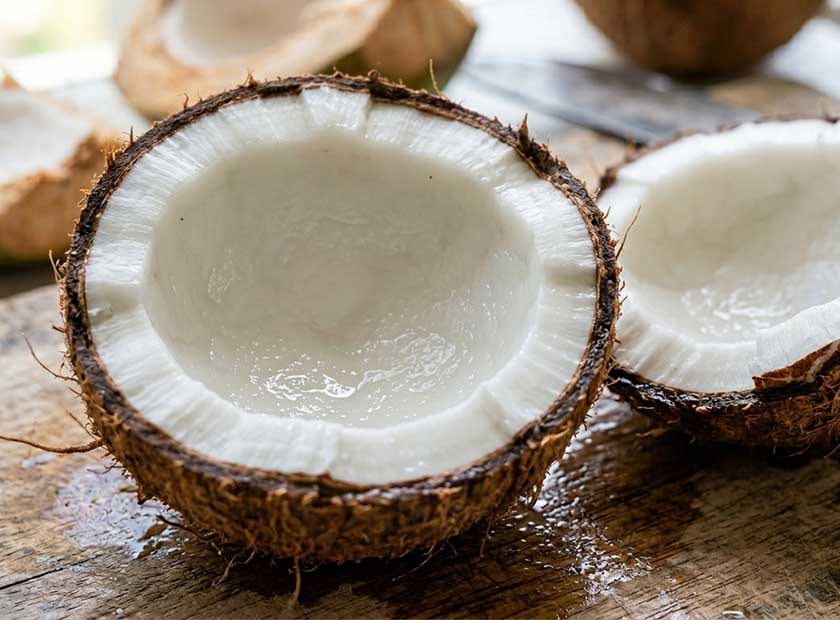
Why Coconut Waste Needs a Double Shaft Shredder
Coconut husk is a long-fibre, high-toughness material. It wraps around single-shaft rotors and fouls hammer screens; whole EFB stalks, at two to three metres long, simply will not feed into most single-shaft machines. A twin-shaft shredder attacks the problem differently: two counter-rotating shafts carry hooks that shear, tear and pull material down between the blades, and fixed cutters between the shafts stop fibre from twining around the rotors. Low speed with high torque keeps the cut controlled and the drive protected.
What the Machine Does to Husk, Shell and EFB
Husk shreds readily into loose fibre-and-chip mix. Shell, being hard and dense, needs more blade thickness and motor power but cuts into uniform chunks. Whole EFB enters through a wide chamber and exits as open, fibrous chips that dry quickly. Output size is set mainly by blade thickness: thicker blades give coarser chips, thinner blades finer ones. Most boiler-fuel installations work with chips in the 50–150 mm range.
Key Selection Factors
Blade steel and thickness
For fibrous, abrasive coconut material, 9CrSi alloy steel is the standard choice for the movable cutters, with blade thickness from 30 mm up to 100 mm depending on the target chip size. Thicker blades also resist bending when the occasional stone or metal fragment comes through with the feed.
Chamber size versus feed form
Whole EFB stalks need a chamber wide enough to take them without pre-cutting — the CTSS-1200 and larger models, with chambers from 1200 mm, accept whole bunches. If your supplier delivers pre-baled or pre-cut husk, a smaller chamber such as the CTSS-600 or CTSS-800 is enough.
Torque, gearbox and drive
Fibrous material loads the drive unevenly, so gearbox specification matters as much as motor kilowatts. The CTSS range pairs each shaft with its own reducer (KA77 on the smallest model up to ZSY500 on the CTSS-2000) and supports PLC control with reverse-on-overload, which clears jams without manual intervention.
Throughput Planning
Throughput depends more on the material than on the nameplate: dry husk shreds fast, wet husk and whole EFB slow the feed, and shell is limited by cutting force. As planning figures, the CTSS-800 class suits a deshelling station or small oil mill, the CTSS-1200 covers a mid-size EFB line, and the CTSS-1500 to CTSS-2000 serve centralised biomass yards. Ask for a throughput test with your actual material — moisture content alone can swing the result substantially.
| Model | Chamber (mm) | Motor | Blade Dia. (mm) | Weight (kg) |
|---|---|---|---|---|
| CTSS-330 | 330×330 | 3 kW ×1 | 160 | ≈400 |
| CTSS-600 | 600×500 | 11 kW ×2 | 210 | ≈2,000 |
| CTSS-800 | 800×600 | 15 kW ×2 | 210 | ≈3,100 |
| CTSS-1000 | 1000×600 | 30 kW ×2 | 300 | ≈4,000 |
| CTSS-1200 | 1200×800 | 37 kW ×2 | 400 | ≈5,500 |
| CTSS-1500 | 1500×1000 | 90 kW ×2 | 500 | ≈12,000 |
| CTSS-2000 | 2000×1200 | 132 kW ×2 | 600 | ≈20,000 |
Operating Tips for Fibrous Material
- Feed with a conveyor rather than manual drops, so the chamber loads evenly and the shafts shear instead of stalling.
- Keep the fixed cutters sharp; they are what stops husk fibre from winding around the shafts.
- Use the reverse-on-overload function to clear jams instead of forcing through.
- Inspect blade edges on a fixed schedule and rotate or replace cutters before cutting quality drops.
- For wet EFB, allow drainage time or pre-drying where possible; drier feed shreds faster and wears blades less.
Where Shredded Coconut Waste Goes
Shredded husk and EFB have ready markets in coconut-producing regions. Chips feed biomass boilers and gasifiers directly. Fine, clean husk fibre moves into coir processing for mats, growing media and substrate blocks. Shell chips go to activated carbon and charcoal production. Everything left over composts well, and shredded EFB is a common mulch on plantations. Because the shredder output is uniform, downstream equipment — dryers, pellet presses, fibre lines — runs without the blockages that raw husk causes.
Can a double shaft shredder process whole coconut shells?
Yes, on the larger models. Shell is hard and dense, so the CTSS-800 and above, with thicker blades and dual 15 kW+ drives, handle it in steady feed. Husk and EFB shred far more easily than shell.
What output size does the shredder produce?
Output chip size is controlled mainly by blade thickness, typically giving chips in the 50–150 mm range. Choose thinner blades for finer chips intended for pelletising or coir lines, thicker ones for boiler fuel.
Is a single shaft shredder suitable for coconut husk?
Single-shaft machines struggle with long, tough fibre: it wraps the rotor and blinds the screen. A twin-shaft design with fixed cutters is the standard choice for husk and whole EFB — our twin shaft vs single shaft comparison covers the trade-offs in detail.
How much throughput can I expect per model?
It depends on material and moisture: dry husk shreds much faster than wet whole EFB. We recommend a throughput test with your actual material before final model selection.
How much does a coconut husk shredder cost?
Price follows model size, blade specification and options such as infeed conveyors. Send us your material type and daily volume for a model recommendation and a firm quotation.
Need a double shaft shredder sized for coconut husk or palm EFB?
Contact our engineers on WhatsApp for model selection and a free quote.
Related: Double shaft shredder topic page · Twin shaft vs single shaft shredder · Shredder operating cost per ton · Double shaft shredder price factors