Screw Press Dewatering Materials: A Practical Guide to 75+ Food, Farm, Fibre and Industrial Feedstocks
One dewatering machine can process an astonishing range of materials — but only if the screen, screw speed and discharge restriction are matched to the feedstock. This guide maps the materials we see most often, groups them by industry, and links to a dedicated page for each one so you can compare a real application before choosing a model.
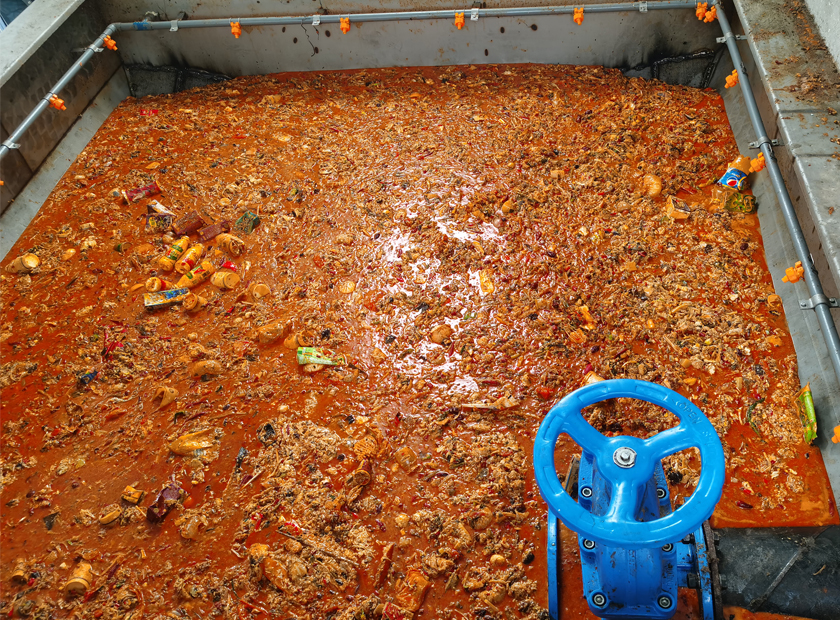
If you are searching for a screw press dewatering machine for a material that is not on a standard list, the useful question is not “can a screw press handle it?” but “how much free water does it carry, and how well does it form a compressible cake?” Those two answers decide almost everything downstream: screen aperture, basket length, feed rate, power draw and the dryness you can expect.
The short answer: what a screw press can dewater
A screw press separates free water from material that has some structure — fibre, peel, grain, husk, granules, pulp or a compressible organic mat. The material enters a wedge-wire basket, the screw carries it forward, and a restriction at the outlet builds pressure. Water drains through the screen while the solids leave as a plug. That is why the same basic machine can thicken paper pulp, press spent grains, separate manure and drain plastic granules: in each case it is removing water that is not chemically bound to the solids.
| Material family | Typical dry matter out | Limiting factor | What to check first |
|---|---|---|---|
| Fruit and vegetable residues | 20–35% | Fine pulp passes the screen | Screen aperture and pre-drain |
| Food waste and mixed scraps | 25–35% | Fat and oil blind the screen | Temperature and wash interval |
| Spent grains, coffee and tea | 30–40% | Fines carried in filtrate | Screen aperture, filtrate return |
| Manure and bedded fibre | 30–45% | Long fibre wraps the screw | Feed consistency and cutter |
| Paper pulp and recycled fibre | 25–38% | Fibre length and freeness | Consistency and white water |
| Herb and extraction residues | 25–40% | Fines and dissolved solids | Screen and filtrate handling |
| Wood, coir and husk fibre | 40–60% | Abrasion and long fibre | Hard facing and screen choice |
| Plastic, mineral and carbon granules | Varies with density | Particle size distribution | Screen aperture and residence time |
These ranges are indicative. Dry matter varies with the season, the upstream process and the particle-size distribution of your particular stream. A material trial is the only way to turn a range into a guarantee.
How the machine decides whether a material is a good fit
Before comparing models, look at the feedstock itself. Five properties matter more than the nameplate capacity of the machine:
| Feed property | Effect in the basket | Adjustment |
|---|---|---|
| Free water content | Sets how quickly the basket fills and how much water must drain | Pre-drain, dilute to a steady feed, or reduce screw speed |
| Fibre or particle stiffness | Stiff material forms a permeable cake; soft material compacts | Change screen aperture and discharge restriction |
| Fines and suspended solids | Fines leave with the filtrate and reduce captured yield | Finer screen, lower speed, return filtrate to the process |
| Fat and oil | Coats the screen and lowers friction between solids | Warm the feed, enlarge apertures, wash more often |
| Abrasive minerals | Wear the screen and screw flight | Hard-facing, spare screen, shorter inspection interval |
| pH and temperature | Affect seal and corrosion life | Specify contact-material grade at ordering stage |
🎥 Screw press dewatering in operation
Watch a CTYZ screw press take a wet fibrous feed, drain free water through the wedge-wire screen and discharge a compact cake.
Food processing and beverage materials
Food lines are the largest group of screw press applications. The goal is usually to reduce the volume of wet residue before composting, drying, feed blending or disposal, and to recover water that can go back into the process. Because the feed changes with the harvest, screen choice is rarely a one-time decision.
Fruit, vegetable and root-crop residues
Peels, pomace, trimmings and whole rejected fruit all behave differently. Soft, high-pectin material drains slowly; coarse root crops drain quickly but may carry grit.
- Vegetable waste Dewatering
- Cabbage Dewatering
- Spinach Dewatering
- Apple Dewatering
- Purple sweet potato Dewatering
- Carrot Dewatering
- Ginger Dewatering
- Lemon Dewatering
- Cactus Dewatering
- Loquat Dewatering
- Leaf cabbage Dewatering
- Edamame skin Dewatering
- Mung bean sprout peel Dewatering
- Potato peel Dewatering
- Sauerkraut Dewatering
- Persimmon Dewatering
- Orange peel Dewatering
- Pineapple peel Dewatering
- Whole orange Dewatering
- Onion Dewatering
- Sweet potato Dewatering
- Radish Dewatering
- Aloe Dewatering
Grains, starches, oilseeds and fermentation residues
Spent grains, distillers grains and starch residues are free-draining and respond well to a screw press. The main loss is fine solids in the filtrate, which can often be returned to the process.
- Corn kernels Dewatering
- Corn bran Dewatering
- Corn husk Dewatering
- Soybean meal Dewatering
- Cassava Dewatering
- Sugarcane Dewatering
- Brewer's grains Dewatering
- Distiller's grains Dewatering
- Bayberry wine lees Dewatering
- Vinegar residue Dewatering
- Dregs of fat Dewatering
- Pepper oil Dewatering
- Spice residue Dewatering
- Monk fruit Dewatering
Coffee, tea, herbs and botanical extraction residues
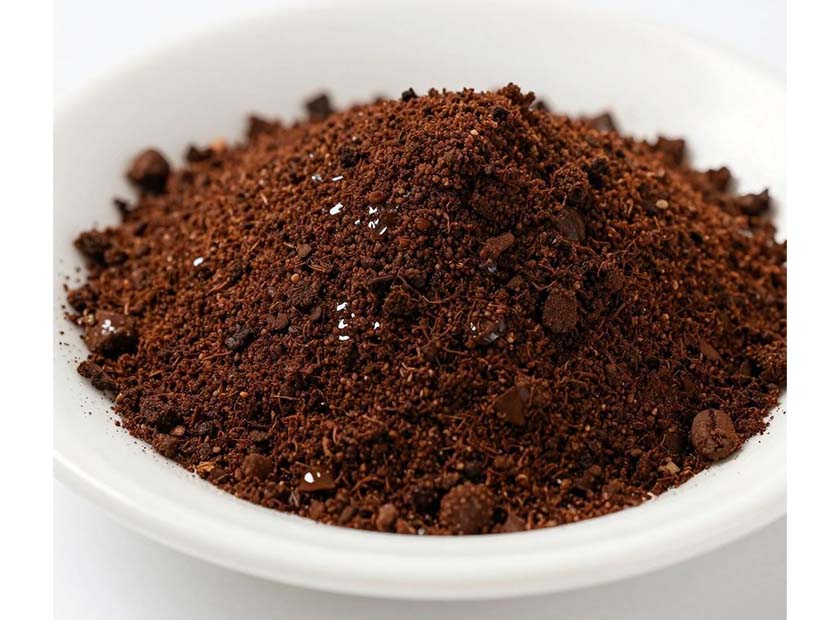
Spent coffee grounds and tea leaves are dense and fine. They need a tighter screen and careful control of the discharge cone, while herb and extraction residues vary widely with the extraction process.
- Coffee grounds Dewatering
- Green tea Dewatering
- Herb residue Dewatering
- Extract residue Dewatering
- Newtol residue Dewatering
- Mushroom root Dewatering
- Mushroom residue Dewatering
- Seaweed Dewatering
Food processing scraps and animal by-products
Mixed scraps, shells, feathers and slaughterhouse by-products are often pressed to reduce transport volume or to prepare material for rendering, composting or further drying.
- Food waste Dewatering
- Household waste Dewatering
- Slaughterhouse waste Dewatering
- Chicken breast Dewatering
- Chicken feathers Dewatering
- Prawns shell Dewatering
- Crayfish shells Dewatering
- Quail eggshell Dewatering
Agriculture, livestock and farm fibre
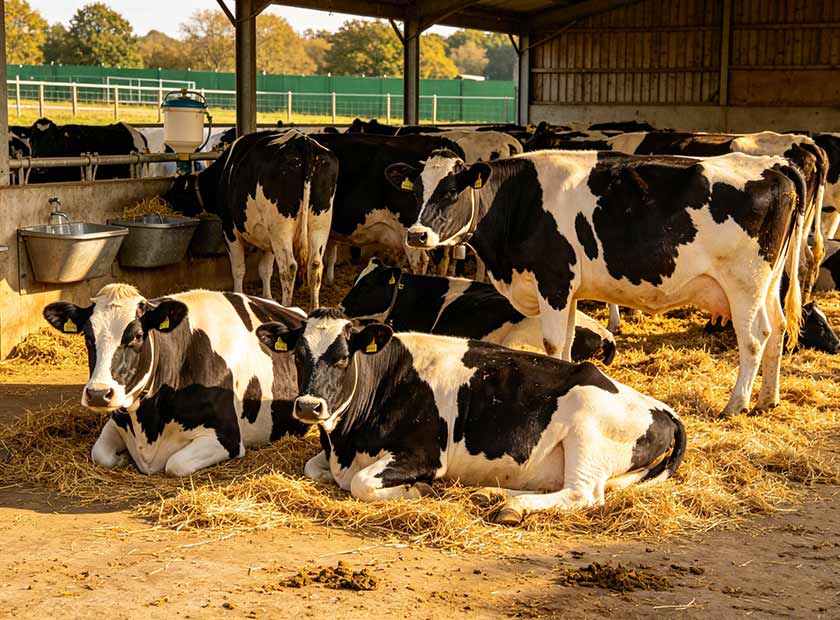
On farms the driver is usually storage and transport. Separating manure or pressing bedding fibre reduces volume, lowers hauling cost and produces a fraction that is easier to compost or spread. Long fibre is the main mechanical challenge: it can wrap the screw if the feed is not cut or diluted consistently.
- Cow manure Dewatering
- Organic fertilizer Dewatering
- Alfalfa Dewatering
- Hemp Dewatering
- Sunflower seed shell film Dewatering
For a deeper look at manure sizing, moisture targets and separator types, read our dedicated guide: Cow Dung and Manure Dewatering: A Complete Screw Press Separator Guide.
Paper pulp, wood and natural fibres
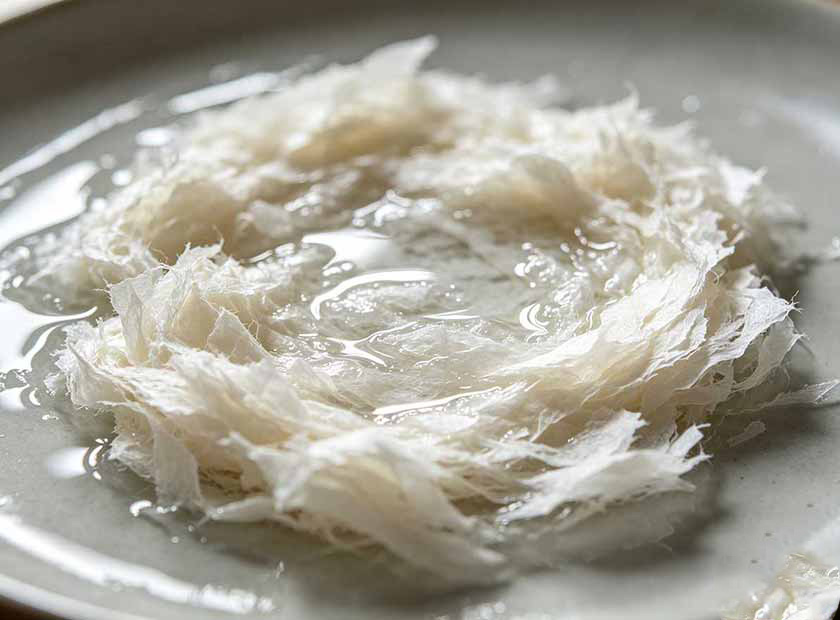
Pulp mills use a screw press to raise consistency before refining, storage or transport. Recycled fibre, bamboo, wood and coconut fibre all drain well, but the aperture must protect fibre length and keep fines in the stock rather than in the white water.
- Paper pulp Dewatering
- Bamboo fiber Dewatering
- Wood fiber Dewatering
- Coconut coir Dewatering
- Coconut shell Dewatering
- Thermal insulation cotton Dewatering
- Gum elastic Dewatering
- Fishing net Dewatering
Capacity and fibre-retention calculations for this group are covered in Screw Press Dewatering for Paper Pulp and Paper Pulp Dewatering Machine: Screw Press vs Traditional Thickening.
Recycling, minerals and engineered materials
Not every application is organic. Plastic granules, metal turnings, carbon, ceramic fibre and sawdust can all be drained in a screw press when the particle size is consistent. Here the concern is abrasion and residence time rather than biological activity. Abrasives call for hard-faced flights and a spare basket; very free-draining granules may need a slower screw to give the plug time to form.
- Plastic particles Dewatering
- PE plastic slag Dewatering
- Plastic powder Dewatering
- Iron filings Dewatering
- Battery waste residue Dewatering
- Activated carbon Dewatering
- Ceramic fiber Dewatering
- Sawdust Dewatering
- Wood charcoal Dewatering
Matching a material to a CTYZ model
Model choice follows three numbers: tonnes of dry solids per day, feed dry matter and target dry matter. Screen area and screw diameter set how much wet feed the machine can accept; the discharge restriction sets how dry the plug becomes. Use the table below as a starting point, then confirm with a trial.
| Feed group | Starting screen | Usual model range | Notes |
|---|---|---|---|
| Fine pulp, tea, herbs | 0.3–0.5 mm | CTYZ-160 / 200 / 300 | Protect solids capture; expect more wash water |
| Spent grains, coffee, vegetable pulp | 0.5–2 mm | CTYZ-200 / 300 | Balance filtrate clarity against capacity |
| Food waste, manure, roots | 1–3 mm | CTYZ-300 / 400 / 500 | Higher volume; check fat and long fibre |
| Wood fibre, coir, husk, granules | 2–6 mm | CTYZ-400 / 500 / 600 | Abrasion control matters more than fine capture |
Browse the dimensional envelopes and motor ratings on the individual model pages: CTYZ-160, CTYZ-200, CTYZ-300, CTYZ-400, CTYZ-500 and CTYZ-600. For the selection method itself, see Screw Press Machine Buyer’s Guide.
A quick dry-matter calculation
Before requesting a quote, work out how much dry solids you actually need to move. The arithmetic is simple and prevents most overspecification:
- Dry solids per day = wet feed per day × inlet dry matter.
- Water removed per day = dry solids × (1 / inlet dry matter − 1 / outlet dry matter), with both figures as decimals.
- Wet cake per day = dry solids / outlet dry matter.
For example, 100 tonnes per day of spent grains at 20% dry matter contains 20 tonnes of dry solids. Pressing it to 35% gives about 57 tonnes of wet cake and removes roughly 43 tonnes of water. If the same 20 tonnes of solids leave at 30%, cake rises to 67 tonnes and water removal falls to 33 tonnes — a difference of 10 tonnes of haulage every day for the same machine and the same feed.
That is why target dryness belongs in the enquiry, not just feed volume. It also explains why two plants with the same nominal capacity can get very different transport bills. For the commercial side of the same calculation, see Screw Press Dewatering Machine Cost.
Reading the filtrate and the cake
A well-set screw press produces a steady plug and a filtrate that looks consistent. Sudden changes are usually diagnostic:
- Filtrate suddenly cloudy: the screen aperture is too large, the feed has more fines than expected, or the basket needs washing.
- Plug too wet: the discharge restriction is too open, the feed rate is too high, or the material has a high fines content that holds water.
- Plug too dry and machine labouring: close the restriction less or increase feed; a starved press wears quickly.
- Capacity falling through the day: screen blinding. Stop and run the wash bar rather than forcing the machine.
- Smell or foaming in the filtrate: long residence time on warm organic feed. Increase throughput and clean the line.
Five mistakes when specifying a screw press for a new material
- Buying on volumetric flow alone. Two tonnes per hour of wet peel and two tonnes per hour of spent grains are very different jobs once dry matter is accounted for.
- Copying a screen aperture from another plant. The same material from a different process can have a completely different particle-size distribution.
- Ignoring fat and oil. Fatty feed blinds a fine screen quickly and changes the friction inside the basket.
- Forgetting the filtrate. It still contains suspended solids and belongs back in the process or in a treatment step, not automatically in the drain.
- No spare screen. On abrasive material a spare basket is cheaper than an unplanned shutdown.
Where to go next
Use the full application directory to browse every material by name, or start from a detailed case guide:
- Spent grain dewatering with a screw press
- Medicine and herb residue dewatering
- Coconut husk shredding and dewatering
- Olive pomace dewatering
- Cassava residue dewatering
- Food waste dewatering equipment
- Fruit and vegetable waste dewatering
- Screw press separators in agriculture
- Screw press design and working principle
Frequently asked questions
Which materials can a screw press dewater?
A screw press handles fibrous or particulate material that releases free water under gentle pressure: fruit and vegetable residues, food waste, spent grains, coffee grounds, tea leaves, herb and extraction residues, paper pulp, manure, animal by-products, wood and coconut fibre, and many plastic, mineral or carbon granules. Materials whose water is chemically bound, or fine suspensions that pass straight through the screen, need a different machine or a pre-thickening step.
How dry will the discharge be?
Dry matter depends far more on the material than on the model. Indicative ranges are 20–35% for fruit and vegetable residues, 25–40% for spent grains and coffee grounds, 30–45% for separated manure, 25–38% for paper pulp and 40–60% for coarse wood or coir fibre. Treat these as starting points and confirm them with a material trial.
Can one machine handle several different materials?
Yes, provided the materials are run in separate batches and the screen is changed or cleaned between them. A mill that alternates paper pulp and herb residue, for example, usually keeps two screen baskets. The screw speed and discharge restriction also need to be reset for each feedstock.
What screen aperture should I start with?
Use 0.3–0.5 mm for pulp and fine botanical residues where solids capture matters, 0.5–2 mm for grains, coffee and most food residues, 1–3 mm for manure and vegetable pulp, and 2–6 mm for long fibre, husks and coarse granules. The aperture is a starting point, not a fixed specification.
Does a screw press remove dissolved solids?
No. It removes free water and the fine solids held with it. Dissolved sugars, salts and colour stay in the filtrate. If the goal is to remove dissolved material, the screw press is a volume-reduction step before evaporation, membrane treatment or biological treatment, not a replacement for them.
How do I choose between CTYZ models?
Start with tonnes of dry solids per day and the feed dry matter, then select the model that keeps the basket fill consistent at that volume. Screen area and screw diameter set capacity; the discharge cone sets final dryness. Our CTYZ-160 to CTYZ-600 pages give the dimensional envelope for each size.
What maintenance does a screw press need on abrasive material?
Abrasive feed such as sand-contaminated roots, mineral powders or coconut shell will wear the screen and the screw flight. Specify hard-faced flights, keep a spare screen, use the wash bar at every shutdown and inspect the restriction cone weekly.
Can you test my material before I buy?
Yes. Send the material description, daily volume, inlet dry matter and target dry matter. We will recommend a model and a starting screen, and give you an expected discharge range and filtrate solids figure for your feedstock.
Final thoughts
Screw press dewatering is a material business, not a model business. Once you know how much free water the feed carries, how well it forms a cake and what the fines will do, the right model and screen follow naturally. Use the application pages linked above as a starting library, then send us your own numbers for a recommendation.
Tell us your material, daily volume, inlet dry matter and target dry matter and we will recommend a CTYZ model and starting screen.
Contact our engineers on WhatsApp for model selection and a free quote.
Related: All applications · Screw press dewatering machine · More guides · Request a material trial