Industrial Shredders and Screw Press Separation Systems: A Practical Guide to Twin Shaft, Single Shaft and Modular Machines
A shredder reduces the size of a waste stream; a screw press removes the water from it. Put the two together and you can turn a bulky, wet, inconsistent feed into a smaller, drier and more valuable output. This guide compares twin shaft, single shaft and modular industrial shredders by the materials they handle, then shows where a screw press separation system fits and how long the whole line takes to install.
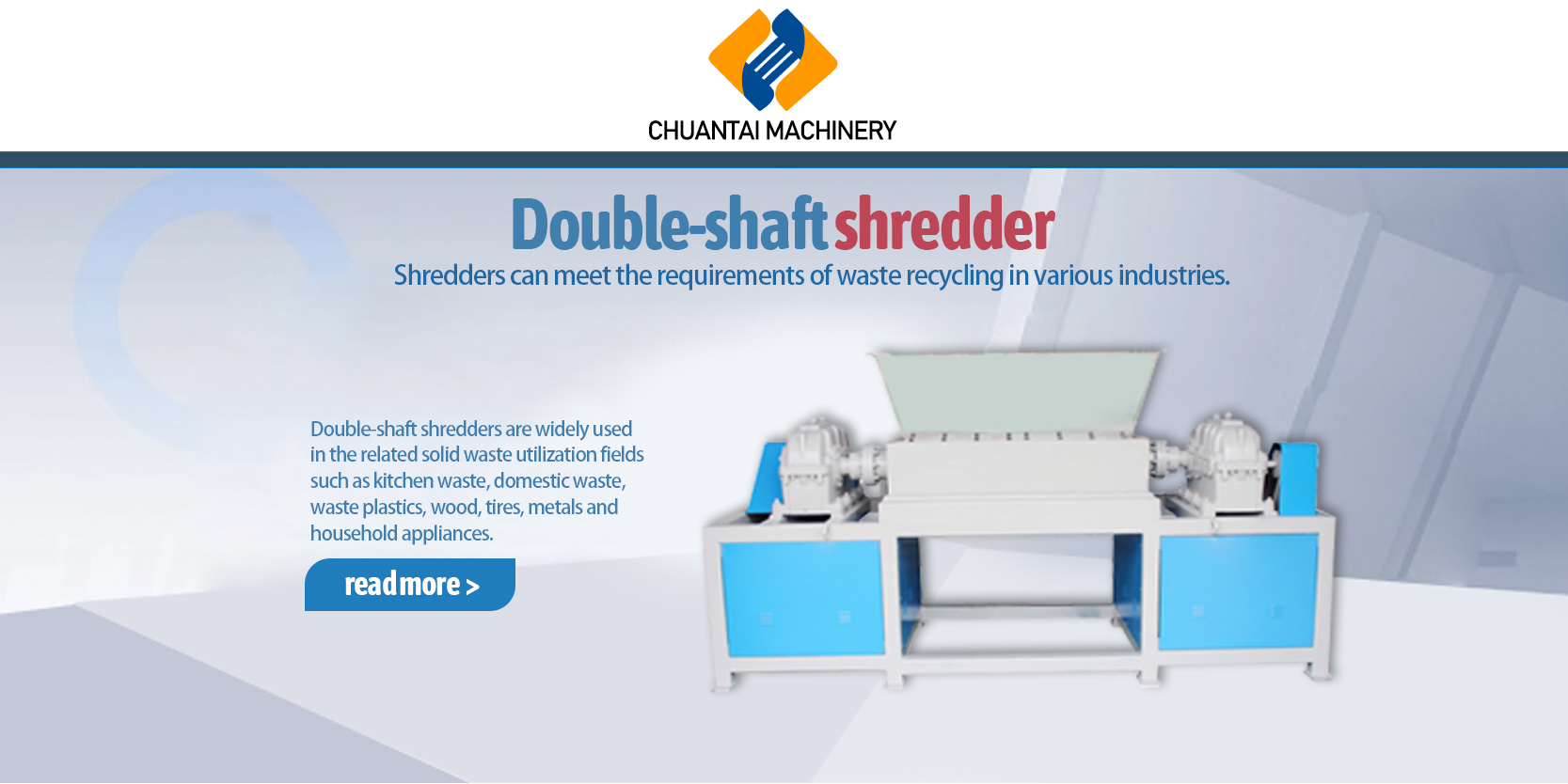
If you arrived here looking for a "double shaft crusher", a "twin shaft shredder", a "trituradora de doble eje" or a "cisaille rotative à deux arbres", you are comparing names for the same class of machine. The useful questions are narrower: which materials will you actually feed it, how dry must the output be, and does the shredder need to sit ahead of an existing separation line? Those three answers decide the configuration far more than the machine name does.
The short answer
Use a twin shaft (double shaft) shredder for mixed, bulky and tough feed such as tires, e-waste, scrap metal, pallets and municipal solid waste. Use a single shaft shredder when the feed is more uniform and you need a smaller, more controllable output, for example plastic sheet, fibre, drums or offcuts. When the goal is to remove water as well as reduce size, add a screw press separator downstream: the shredder opens the material up, and the press does the dewatering.
| Question | Short answer | Read more |
|---|---|---|
| Which materials can a double shaft shredder process? | Tires, plastics, scrap metal, wood pallets, household and municipal waste, e-waste, drums and bulky industrial offcuts. | Double shaft shredder |
| Which materials suit a single shaft shredder? | More uniform feed: plastic sheet and film, fibre, rubber, paper, drums and sized industrial scrap. | Twin vs single shaft |
| Modular or traditional shredder? | Modular builds suit phased capacity and easier transport; traditional welded frames suit fixed, high-load lines. | Compact shredder guide |
| Can it join an existing separation line? | Yes, with a feed conveyor, magnetic or optical sorting upstream, and a screw press or screen downstream. | Screw press systems |
| How long does installation take? | A single machine is typically commissioned in days; a shred-and-press line in weeks, depending on civil works. | Installation timeline |
What is a twin shaft (double shaft) shredder?
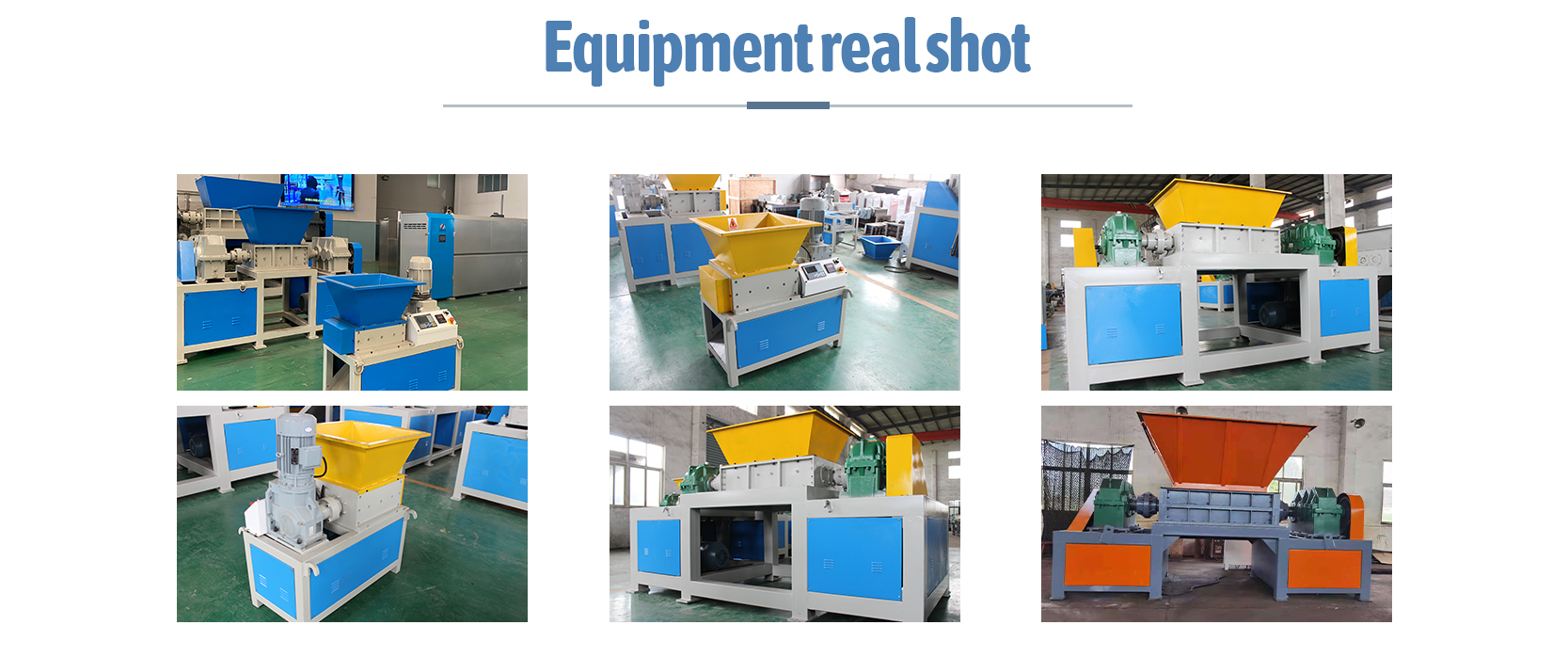
A twin shaft shredder uses two counter-rotating shafts fitted with intermeshing cutters. The shafts run slowly and with high torque, pulling the feed in and tearing or shearing it between the cutters and against a stationary screen. Because the cutters hook and pull rather than rely on a sharp edge alone, the machine tolerates mixed and contaminated feed that would blunt a granulator. Our double shaft shredder range is built around forged alloy blades, dual motors and gearboxes, and a screen that sets the discharge size. See the CTSS twin shaft shredder page for the blade box, structure and technical parameters.
The practical advantage is feed flexibility. A single machine can take tires one shift, wood pallets the next and mixed municipal solid waste after that, with the blade thickness and screen changed to suit. That is why the twin shaft design is the usual starting point for recycling yards and for any line where the input is not tightly controlled.
What is a single shaft shredder?
A single shaft shredder uses one rotor with replaceable knives working against fixed counter-knives. It runs faster than a twin shaft machine and produces a more uniform, smaller chip, which is useful when the output has to go straight into a pelletiser, a washing line or a dewatering screen. The trade-off is that it prefers a more consistent feed: long, tangled or heavily mixed material can wrap the rotor or jam the hopper. If your stream is sized and fairly clean, a single shaft machine is often the quieter and more energy-efficient choice; our twin shaft vs single shaft comparison walks through the decision in more detail.
🎥 Industrial Shredder in Operation
Watch the twin shaft cutters pull in and tear down mixed waste before it moves on to separation.
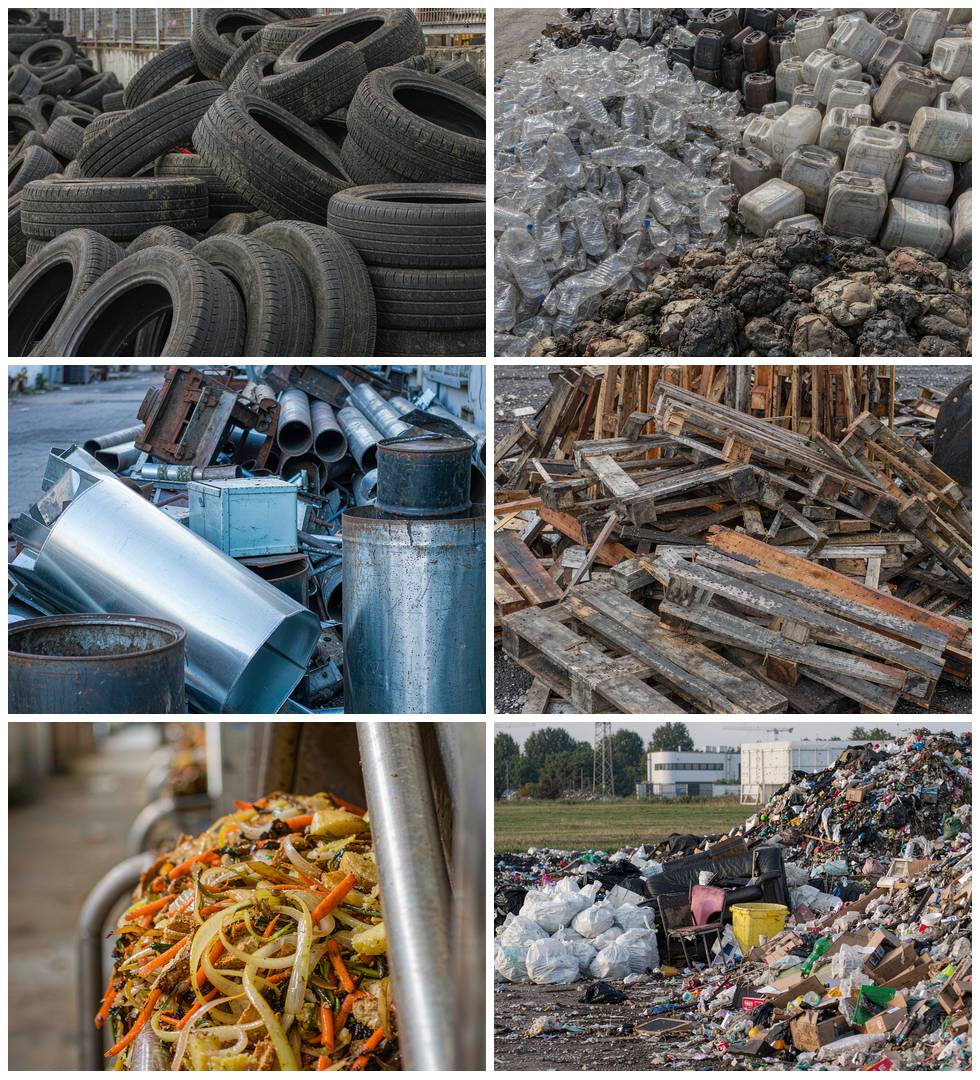
Which materials can a double shaft shredder process?
This is the question behind "qué materiales se pueden procesar con una trituradora de doble eje" and "what materials can a double shaft crusher handle". The short list is long because the machine is a size-reduction tool, not a chemical process: almost anything solid that can be gripped and torn will work, provided the cutter thickness, shaft speed and screen are matched to it.
| Material group | Examples | Points to watch | Related page |
|---|---|---|---|
| Tires and rubber | Passenger tires, truck tires, rubber products | Remove beads where possible; expect steel wire in the output | Tire recycling |
| Plastics | Bottles, crates, film, drums, pipe offcuts | Thin film can wrap; pair with a screen or air separator | Cost factors |
| Scrap metal | Cans, light scrap, e-waste frames | Use thicker cutters; add magnets downstream | CTSS shredder |
| Wood and pallets | Pallets, crates, branches, timber offcuts | Watch for nails and embedded fasteners | Fibrous material |
| Municipal solid waste | Household waste, RSU / CSW, commercial refuse | Mixed and abrasive; plan for pre-sorting | MSW shredding |
| Organic and wet waste | Food waste, crop residues, market waste | Shred first, then dewater with a screw press | Food waste |
| Fibrous material | Hemp, coir, husks, straw, paper | Long fibre needs a cutter and a open screen | Hemp |
For the wetter organic streams the shredder is only the first step. Once the material is opened up, a screw press dewatering machine can remove the free water far more effectively than it could on whole, uncut material. Our materials guide lists more than seventy feedstocks with indicative output dryness.
Which materials suit a single shaft shredder better?
The counterpart question — "para qué materiales es más adecuada una trituradora de un solo eje" — has a different answer. A single rotor with fixed counter-knives excels where the feed is consistent and the target chip size is small and repeatable.
| Best-fit feed | Why it suits a single shaft machine |
|---|---|
| Plastic sheet, film and pipe | Cuts cleanly into a uniform chip for washing or re-pelletising |
| Fibre, paper and cardboard | Produces a consistent flake with low dust when knives are sharp |
| Rubber and cleaned offcuts | Steady feed lets the rotor hold a stable size and lower energy draw |
| Drums and light containers | Hydraulic ram feeds the rotor at a controlled rate |
If the stream is mixed, wet and bulky, stay with a twin shaft machine. If it is uniform and size-sensitive, a single shaft shredder is usually the better match. In some plants the two are used in series: a twin shaft machine does the rough reduction and a single shaft machine refines the output.
Modular shredder vs traditional shredder
A modular shredder is assembled from standard frames, power packs and hopper sections that can be transported separately and bolted together on site. A traditional shredder is a single welded frame delivered complete. Neither is inherently better; the choice follows the site and the expansion plan.
| Factor | Modular shredder | Traditional welded shredder |
|---|---|---|
| Transport | Ships in sections; suits remote or constrained sites | Ships as one unit; needs crane access |
| Capacity expansion | Add a second module or power pack later | Usually requires a new machine |
| Commissioning | More on-site assembly and alignment work | Faster to place and connect |
| Rigidity under shock load | Bolted joints need correct torque and inspection | Welded frame is very rigid |
| Maintenance access | Sections can be swapped or isolated | Single integrated structure |
For a small or phased operation, the modular approach keeps the first investment lower and leaves room to add capacity. For a fixed, high-load line running abrasive scrap around the clock, a traditional welded frame is often the simpler long-term choice. The compact shredder guide covers the smaller end of the same design family.
Twin shaft vs single shaft at a glance
| Criterion | Twin shaft | Single shaft |
|---|---|---|
| Feed tolerance | High; handles mixed and bulky waste | Moderate; prefers a consistent feed |
| Output | Coarser, more variable chip | Smaller, more uniform chip |
| Speed and torque | Slow, high torque | Faster, lower torque |
| Typical use | MSW, tires, metal, pallets | Plastic, fibre, paper, drums |
| Ahead of a screw press | Good for tough or bulky wet waste | Good for uniform wet flake |
There is also a third option: a shear. If your comparison is shredder vs shear rather than twin vs single, read shredder vs shear before you shortlist a machine. For purchase checks, see seven checks before you buy and operating cost per ton.
Shredding plus dewatering: screw press separation systems
A screw press separation system is a continuous machine that removes free water from fibrous or particulate material. Feed enters a wedge-wire screen; a screw carries it forward against an adjustable restriction; water drains through the screen and the solids leave as a compressed cake. If you are asking "what is a screw press", that is the whole principle: mechanical pressing, no thermal drying, and a filtrate that can be returned or treated separately.
The reason to pair a shredder with screw press separators is simple: a press needs material it can compress evenly. Whole fruit, long hemp stalks, packed food waste or bundled manure fibres feed poorly; shredded material feeds consistently. The shredder does not replace the press, and the press does not replace the shredder. They solve two different problems in one line: size first, water second. Our manure dewatering guide and the screw press buyer's guide go deeper into each stage.
Can a shredder be integrated into an existing separation line?
Yes. In most plants the shredder is inserted at the front of the line, after receiving and before the first separation step. The key is to match the discharge size of the shredder to the feed requirement of the downstream equipment, and to give the whole line a buffer so that a change in incoming waste does not stop the press.
- Receiving and sorting — a hopper, feeder and, where needed, magnets or an optical sorter remove material the shredder should not see.
- Size reduction — the twin shaft or single shaft shredder opens the feed and sets a target chip size with its screen.
- Buffer and metering — a small surge bin and a controlled conveyor keep the downstream press fed at a steady rate.
- Separation and dewatering — a screw press, screen or centrifuge removes water; the filtrate goes to treatment or reuse.
- Discharge — the drier cake moves to storage, transport, composting or further processing.
The question "es posible integrar una trituradora industrial de doble eje en una línea de separación existente?" usually comes down to space and control, not whether the machines are compatible. A site survey of the feed point, power supply and discharge route is enough to confirm it. Browse the full application list for examples of shredded and dewatered streams.
Installation timeline: how long does it take?
Installation time depends on whether you are placing one machine or building a line. The figures below are planning ranges from order to first production; civil works and local permitting are the usual variables.
| Scope | Typical lead time | On-site work |
|---|---|---|
| Standalone shredder | 4–8 weeks including manufacture | 2–4 days to place, align and connect |
| Shredder with feed conveyor | 6–10 weeks | About a week including conveyor alignment |
| Shredder + screw press line | 10–16 weeks | 2–4 weeks including pipework and commissioning |
| Fully integrated separation line | 16–28 weeks | 4–8 weeks with civil works and permits |
To answer "cuánto tiempo lleva la instalación de una trituradora industrial de doble eje?" directly: the machine itself is normally placed and running within a few days once it is on site. The weeks are spent on manufacture, foundations, conveyors and the rest of the line. Send us your site drawing and we will give you a realistic schedule rather than a catalogue number.
Application focus: farm, food, fibre and municipal waste
Dairy farm manure separation. Manure separation for dairy farms starts with consistent feed. Shredding bedding and long fibre before the press protects the screen and improves cake consistency. An advanced manure separator for large farms is usually a screw press sized for dry-solids load, not for liquid volume alone; see the cow manure application for the typical stream.
Liquid manure and slurry management on dairy farms. Where the goal is a slurry management system for dairy farming, separation comes first: the shredder and press split the stream into a fibre-rich solid and a thinner liquid that is easier to store, pump or treat. The solid fraction can be composted or used as bedding after further drying.
Food waste dewatering. A food waste dewatering machine works best on material that has been shredded to a controlled size. Mixed kitchen and market waste contains peel, packaging and bone; a twin shaft shredder handles the variation, and the press then removes the free water. Start with the food waste page and the vegetable residue page.
Hemp and fibre. Hemp dewatering is a size-reduction problem before it is a pressing problem. Long stems wrap a rotor, so they are cut first and then pressed to remove field and retting water. The same approach applies to coir, straw and other long fibres on the hemp application page.
Municipal solid waste. For RSU / CSW (residual urban solid waste), shredding is the first controlled step before sorting or biological treatment. The feed is abrasive and unpredictable, so cutter wear, magnets and a downstream screen matter more than nameplate capacity; see MSW shredding.
Choosing the right configuration
Start with the material and the hourly throughput, then work backwards to the machine. Our CTSS twin shaft shredder is offered in CTSS-330, CTSS-800, CTSS-1200 and CTSS-2000 configurations; blade thickness, cutter material and screen aperture are specified per application. For the dewatering stage, the CTYZ-160 to CTYZ-600 range is covered on the screw press page and the individual model pages linked from it. If you are still deciding on the press itself, the selection guide explains the screening logic.
The most useful information you can send before a recommendation is: a description and photo of the feed, tonnes per hour, inlet moisture, target output size and target dryness, and whether the line is new or being added to an existing plant.
Five common mistakes
- Buying on capacity alone. A rated tonnage assumes a known material; mixed waste can halve it.
- Ignoring what happens after the shredder. If the next stage cannot take the chip size, the line backs up.
- Specifying thin cutters for abrasive scrap. Nails, sand and metal slurry accelerate wear.
- Skipping the buffer before the press. A screw press wants steady feed, not surges.
- Forgetting the filtrate. Dewatering produces a water stream that still needs a route.
Frequently asked questions
What materials can a double shaft shredder process?
Tires, scrap metal, wood pallets, mixed municipal waste, e-waste, drums, bulky plastic and organic feed. Blade thickness, cutter steel and screen aperture are matched to the material; abrasive or contaminated feed simply means a heavier specification.
Which materials are better suited to a single shaft shredder?
Uniform feed such as plastic sheet and film, fibre, paper, rubber and cleaned offcuts, where a small and repeatable chip size matters. Mixed or tangled bulky waste is better handled by a twin shaft machine.
What is the difference between a modular and a traditional shredder?
A modular shredder ships in sections that bolt together on site and can be expanded later. A traditional shredder is one welded frame, faster to commission and stiffer under shock load. Site access and expansion plans decide which fits.
Can a double shaft shredder be integrated into an existing separation line?
Yes. It is normally installed after receiving and sorting and before the dewatering or screening stage. A buffer hopper and a metered conveyor keep the downstream machine fed at a steady rate.
How long does installation take?
A standalone machine is placed and commissioned in a few days once delivered. A shredder and screw press line usually takes two to four weeks on site, while lead time including manufacture is commonly ten to sixteen weeks.
What is a screw press separation system?
It is a continuous press that removes free water from fibrous or particulate material. A screw moves the feed through a wedge-wire screen against an adjustable restriction; water drains away and the solids discharge as a compressed cake.
Do I need a shredder if I already have a screw press?
For bulky, long-fibre or packed feed, usually yes. The shredder makes the feed uniform so the press can compress it evenly. For already fine and consistent material, a press can work on its own.
Can the same line handle both dry scrap and wet organic waste?
It can, provided the streams are run in separate batches and the screen, cutter set and screw speed are reset between them. Wet organic feed also needs cleaning of the screen and press after the run.
Final thoughts
Choose the shredder for the material, and choose the press for the water. A twin shaft machine gives you the widest feed tolerance, a single shaft machine gives you a finer, more uniform chip, and a modular build keeps expansion open. Once you know the feed, the throughput, the target size and the target dryness, the right line follows naturally. Use the pages linked here as a starting library, then send us your own numbers.
Tell us your material, hourly volume, target chip size and target dryness and we will propose a shredder and separation configuration.
Contact our engineers on WhatsApp for model selection and a free quote.
Related: Double shaft shredder · Screw press systems · All applications · More guides · Request a quote